10 minutes free every day
Continue audio lessons in the app
Word explanations appear automatically in sync with the audio.
No login required · synced translations · playback with the screen locked
Choose your learning language and open this lesson in the app.

About This Lesson
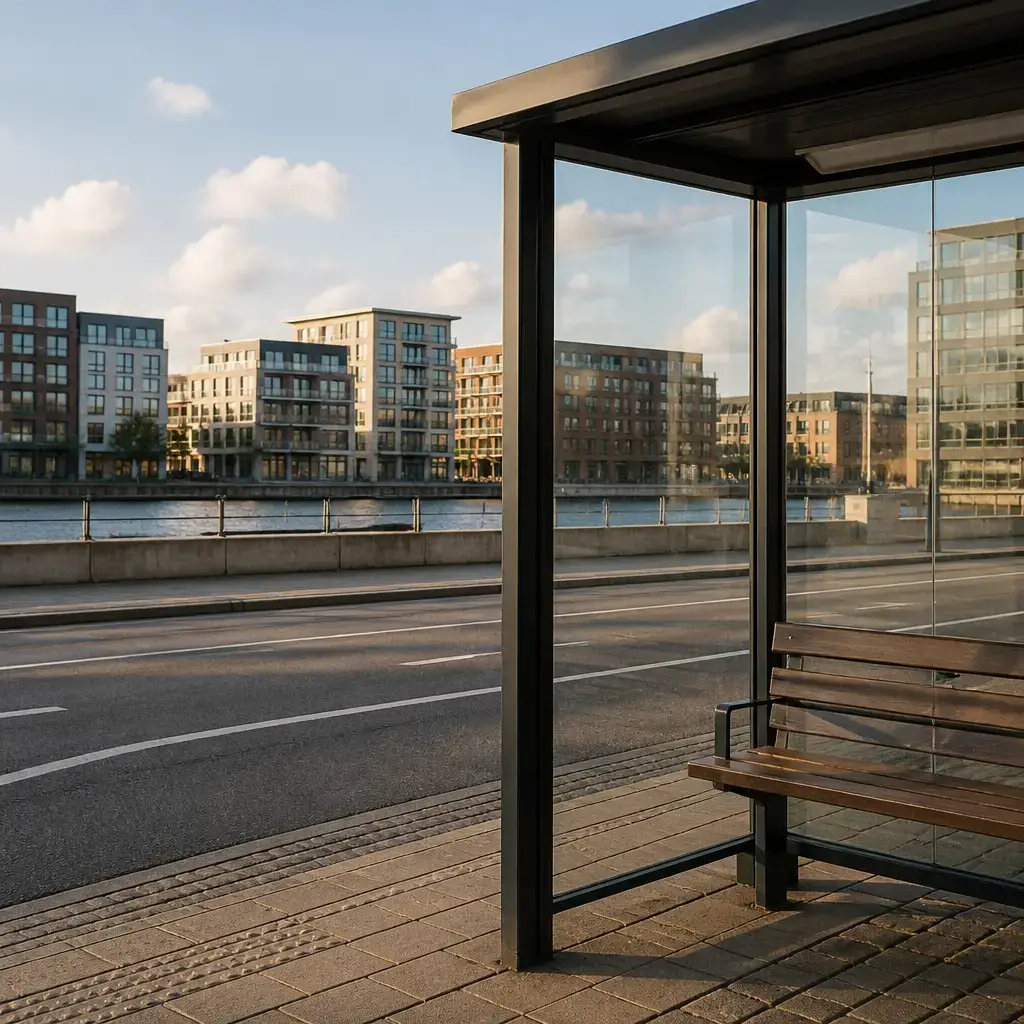
Use Asking about a delayed bus to practice Danish conversation, pronunciation, vocabulary, grammar, and quizzes.
Dialogue
Undskyld, er bussen forsinket?
oon-SKOOL, air BOO-s'n for-SING-uhd? Excuse me, is the bus delayed?Der er meget trafik i nærheden.
dair air MAYTH trah-FEEK ee NAIR-hay-th'n. There's heavy traffic nearby.Ved du, hvornår den kommer?
veh DOO, vor-NOR den KUM-uh? Do you know when it will arrive?Den er stadig på vej.
den air STAY-thee poh VYE. It's still on the way.Så ventetiden kan blive længere.
soh VEN-uh-teeth-n kan blee-vuh LENGTH-uh. So the wait may be longer.Er der en anden bus på den samme rute?
air dair en AHN-en boos poh den SAH-muh ROO-thuh? Is there another bus for the same route?Der er en, men den tager længere tid.
dair air en, men den TAY-uh LENGTH-uh teeth. There is, but that option takes longer.Jeg bliver her og venter på denne bus.
yai BLEE-vuh hair oh VEN-tuh poh DEN-uh boos. I'll stay here for this bus.Det er nok bedst, hvis du kan vente.
deh air nok BEST, vees doo kan VEN-tuh. That's probably best if you can wait.Sentence explanations
Undskyld, er bussen forsinket?
Excuse me, is the bus delayed?
- Undskyld
- excuse me
- er
- is
- bussen
- the bus
- forsinket
- delayed
More detail
Undskyld is the Danish form used here to politely get someone’s attention: “Excuse me.” It is also related to the verb undskylde, “to excuse/apologize.” As a reusable opening, Undskyld, ...? can precede a question. er is the present-tense form of være, “to be.” Danish uses er for present “am,” “are,” and “is”; it does not change for person or number. In this sentence it comes first because Danish yes/no questions normally use verb–subject order: Er bussen forsinket? — “Is the bus delayed?” bussen means “the bus.” It consists of bus plus the definite singular ending -en: bus — “a bus” in an indefinite noun phrase; bussen — “the bus.” The ending belongs to the noun, not to the adjective. forsinket means “delayed” here. It is an adjective used after er to describe the subject, so the pattern is subject + er + adjective: Toget er forsinket. — “The train is delayed.” The related verb forsinke means “to delay,” but forsinket in the fixed sentence describes the bus’s status rather than expressing an action by the bus. Together, er bussen forsinket? forms a yes/no question: er (“is”) comes before the subject bussen (“the bus”), and forsinket (“delayed”) completes the description. With the polite opener, Undskyld, er bussen forsinket? means “Excuse me, is the bus delayed?” This is a useful polite way to ask about a current transport status.
Der er meget trafik i nærheden.
There's heavy traffic nearby.
- Der er
- there is/are
- meget
- much; a lot of
- trafik
- traffic
- i nærheden
- nearby
More detail
Der er is the standard Danish existential pattern meaning “there is” or “there are.” It introduces something that exists or is present; the form er comes from være (“to be”). The choice between “there is” and “there are” depends on the English translation, not on a change in the Danish phrase. meget means “much” or “a lot of” here. It is used with the mass noun trafik, so it describes a large amount rather than a counted number of separate items. Compare meget trafik (“a lot of traffic”) with mange biler (“many cars”), where mange is used with a plural count noun. trafik means “traffic.” In this sentence it refers to traffic in general, without an article. A useful related contrast is bil (“car”) and biler (“cars”); trafik is normally treated as a mass noun when referring to the flow of vehicles. i nærheden is a reusable location phrase meaning “nearby” or “in the vicinity.” The preposition i is part of the phrase, so it is useful to learn the combination rather than translate the words independently each time. Example: Der er en butik i nærheden. — “There is a shop nearby.” Together, Der er introduces what is present, meget trafik identifies a large amount of traffic, and i nærheden gives its location. The complete utterance therefore means: “There’s heavy traffic nearby.”
Ved du, hvornår den kommer?
Do you know when it will arrive?
- Ved du
- do you know
- hvornår
- when
- den
- it
- kommer
- arrives
More detail
Ved du combines ved (“know”) with du (“you”). ved is the present-tense form of at vide (“to know”): jeg ved = “I know”, du ved = “you know”. In a direct yes/no question, Danish commonly places the finite verb before the subject: Ved du ...? means “Do you know ...?” hvornår means “when” and introduces a question about time. In this sentence it begins an embedded question, so the word order after it is not the direct-question order: hvornår den kommer has the subject den before the verb kommer. den is a singular common-gender pronoun. Here the fixed translation identifies it as “it”, referring to the thing whose arrival is being discussed; the supplied texts do not specify that thing more precisely. Danish pronouns must match the grammatical properties of their antecedents, so den is not interchangeable with the neuter singular pronoun det in every context. kommer is the present-tense form of at komme (“to come”). In this embedded question, the present form is understood as a future arrival: hvornår den kommer = “when it will arrive.” The same form can also mean “comes” in a present-time context; the intended future reading here comes from the question about the arrival time. Together, Ved du asks whether the listener has the information, and hvornår den kommer specifies that the information concerns the time of the thing’s arrival. The whole utterance therefore means “Do you know when it will arrive?”
Den er stadig på vej.
It's still on the way.
- Den
- it
- er
- is
- stadig
- still
- på vej
- on the way
More detail
Den means “it” here. It is a Danish pronoun used for a common-gender singular referent; the fixed translation identifies the referent only as “it,” so its specific identity is not stated here. Danish also has det for neuter singular referents, while plural “they” is de. er is the present-tense form of at være, “to be.” The useful chain is at være → er; er can mean “is” or “are” depending on the subject. Here, with singular Den, it means “is.” stadig means “still,” showing that the situation continues at the relevant time. It is an adverb and does not change for number or gender. Example: Hun arbejder stadig. — “She is still working.” på vej is a reusable expression meaning “on the way” or “in transit.” Literally, it contains på (“on”) and vej (“way/road”), but together they describe movement toward a destination or something that has not yet arrived. Example: Pakken er på vej. — “The package is on the way.” Together, Den er says “It is,” stadig adds the continuing meaning “still,” and på vej describes its current status as being in transit. The complete utterance therefore means “It’s still on the way.”
Så ventetiden kan blive længere.
So the wait may be longer.
- Så
- so
- ventetiden
- the waiting time
- kan
- may; can
- blive
- become
- længere
- longer
More detail
Så means “so” here and links this sentence to the preceding information. It introduces a consequence: “So …”. ventetiden means “the waiting time”. The base noun is ventetid (“waiting time”); ventetiden is its definite singular form, meaning “the waiting time”. Danish commonly forms definiteness by adding an ending to the noun. Example: Ventetiden er kort. — “The waiting time is short.” kan is the present form of kunne, a modal verb meaning “can” or “may”. Here it expresses possibility, so “may” fits the fixed translation. A modal verb is followed by an infinitive without at: kan blive means “may become” or “can become”. Example: Det kan ske. — “It may happen.” blive is the infinitive of “become” or, in some contexts, “stay/remain”. With længere here, it describes a change in duration: the waiting time may become longer. Example: Dagen bliver længere. — “The day becomes longer.” længere is the comparative form of lang, “long”. The comparison chain is lang → længere (“long” → “longer”). It describes the waiting time, not blive; blive længere means “become longer”. Example: Denne vej er længere. — “This road is longer.” Together, Så ventetiden sets up the consequence and identifies the waiting time, while kan blive længere says that it may increase in length. The whole utterance means: “So the wait may be longer.”
Er der en anden bus på den samme rute?
Is there another bus for the same route?
- Er der
- is there
- en anden
- another
- bus
- bus
- samme
- same
- rute
- route
More detail
Er der is the Danish existential question pattern meaning “is there …?” The form er is the present form of være (“to be”), while der functions here as an existential placeholder rather than referring to a particular place. Pattern: Er der + noun phrase? — Er der en ledig plads? means “Is there a free seat?” en anden means “another” in this sentence: one additional or different item of the relevant kind. anden is the singular common-gender form; compare et andet with a singular neuter-gender noun and andre with plural nouns. Here en and anden fit the singular common-gender noun bus that follows. Example: Jeg tager en anden bus. — “I’ll take another bus.” bus is the noun “bus.” Its indefinite singular form is en bus; its definite singular form is bussen, and its plural is busser. Example: Bussen kommer snart. — “The bus is coming soon.” samme means “same.” In den samme rute, it identifies the route as the same one already relevant in the context. Danish commonly uses samme with a definite noun phrase, as in den samme bog (“the same book”). The form samme itself does not change for the noun’s gender or number in this pattern. rute means “route.” It is a common-gender noun: en rute (an indefinite route), ruten (the route), and ruter (routes). In the utterance, den samme rute is “the same route”; den marks the noun phrase as definite, while samme specifies which definite route is meant. Together, Er der en anden bus på den samme rute? asks whether another bus exists for/on the same route. på den samme rute expresses the route relation, so the complete meaning is: “Is there another bus for the same route?”
Der er en, men den tager længere tid.
There is, but that option takes longer.
- Der er
- there is
- en
- one
- men
- but
- den
- that option
- tager
- takes
- længere
- longer
- tid
- time
More detail
Der er is the Danish existential pattern for saying that something exists or is available: “there is/are.” The form er is the present form of være (“to be”) and does not change for person or number in the present tense. Example: Der er en bus. — “There is a bus.” en is used here as a standalone indefinite pronoun meaning “one,” with the understood meaning supplied by the surrounding exchange: one available option. It is not functioning here as an article before a following noun. Example: Jeg vil have en. — “I want one.” men means “but” and links two contrasting parts. It introduces the fact that the available option has a disadvantage compared with what was being sought. Example: Jeg kommer, men jeg bliver ikke længe. — “I’m coming, but I won’t stay long.” den is a singular common-gender demonstrative pronoun, meaning “that one” or, in this context, “that option.” Here it points back to the available option identified by en; the translation makes that intended reference explicit. As a determiner, den can also come before a common-gender noun, as in den lange bus — “the long bus.” tager is the present form of tage, “to take.” Danish present-tense verbs do not change according to the subject’s person or number, so the same form is used with jeg, du, den, and plural subjects. In tage tid, the verb is part of a reusable expression meaning that something takes time. Example: Det tager to timer. — “It takes two hours.” længere means “longer” here. It is the comparative form related to lang (“long”): lang — “long,” længere — “longer,” længst — “longest.” The comparative indicates more time than the relevant alternative or expectation, rather than simply describing duration as long. Example: Denne vej er længere. — “This route is longer.” tid means “time.” In the expression tage tid, it is the noun that names the duration being required. Example: Det tager tid. — “It takes time.” Together, Der er en says that one option is available. men contrasts this availability with a drawback; den refers back to that option; and tager længere tid says that it requires more time. Thus the whole utterance means: “There is one, but that option takes longer.”
Jeg bliver her og venter på denne bus.
I'll stay here for this bus.
- Jeg
- I
- bliver
- stay / remain
- her
- here
- venter på
- wait for
- denne
- this
- bus
- bus
More detail
Jeg means “I” here: it is the first-person singular subject pronoun. It identifies the speaker as the person who stays and waits. Compare du for “you” when addressing one person. bliver is the present form of blive, “to stay/remain” or “to become.” In this sentence, the relevant meaning is “stay.” Danish present forms can describe a current action or a planned action, so Jeg bliver her naturally means “I’ll stay here” in this context. Example: Jeg bliver hjemme. — “I’m staying home.” her means “here,” referring to the speaker’s current location. It is an adverb and does not change for number or gender. venter på is the construction “wait for.” venter is the present form of vente, “to wait,” and på introduces what is awaited. The preposition is part of the reusable pattern: vente på + noun/person. Example: Hun venter på toget. — “She is waiting for the train.” denne means “this” and points to a specific nearby or otherwise identified singular noun. Here it modifies bus, so the phrase means “this bus.” Danish demonstratives agree with the noun’s grammatical gender and number; denne is used with a singular common-gender noun, while dette is used with a singular neuter noun and disse with plural nouns. The demonstrative itself expresses identification, not a numerical count. bus means “bus.” It is a singular common-gender noun; its indefinite form is en bus, and its definite form is bussen (“the bus”). In the fixed phrase, denne bus is a demonstrative noun phrase meaning “this bus.” Together, Jeg bliver her gives “I’ll stay here,” and venter på denne bus gives “wait for this bus.” The full utterance is therefore: “I’ll stay here and wait for this bus.” The conjunction og links the speaker’s staying with the waiting action.
Det er nok bedst, hvis du kan vente.
That's probably best if you can wait.
- Det er
- it is
- nok
- probably
- bedst
- best
- hvis
- if
- du kan
- you can
- vente
- wait
More detail
Det er is the Danish “it is” construction. Here det is a formal subject: the evaluation comes in the following bedst phrase and conditional clause, rather than referring to a specific object. er is the present form of være (“to be”). nok means “probably” in this sentence and makes the judgment less than certain. In other contexts, nok can also mean “enough,” so its meaning depends on how it is used. bedst means “best” here. It is the superlative form in the comparison chain god (“good”) → bedre (“better”) → bedst (“best”). The form is evaluating the suggested situation, not modifying a noun. hvis introduces a condition and means “if.” A reusable pattern is hvis + clause: Hvis du kommer, venter jeg. — “If you come, I’ll wait.” du kan means “you can.” du is the second-person singular pronoun “you,” and kan is the present form of kunne, expressing ability or possibility here. After a modal such as kan, Danish normally uses the infinitive without at: du kan vente means “you can wait,” not literally “you can to wait.” vente is the infinitive “to wait.” Its present-tense form is venter, as in jeg venter (“I wait” or “I am waiting”). Together, Det er nok bedst gives “That is probably best,” and hvis du kan vente gives “if you can wait.” The complete utterance therefore means: “That’s probably best if you can wait.”
Grammar Points
Hvis + sætning, bliver ...
Hvis du venter, bliver ventetiden længere.
vees doo VEN-tuh, BLEE-vuh VEN-uh-teeth-n LENGTH-uh.If you wait, the waiting time becomes longer.
Efter en hvis-sætning står verbet før subjektet i hovedsætningen: bliver ventetiden.
nok + superlativ
Det er nok bedst.
deh air nok BEST.It is probably best.
Nok betyder her “sandsynligvis”, mens bedst er superlativformen af god.
Danish Vocabulary
Ventetiden kan blive længere.
- Gender
- common
Er bussen forsinket?
Er bussen forsinket?
Ved du, hvornår den kommer?
Der er meget trafik i nærheden.
Hvornår den kommer?
Den er stadig på vej.
Den er stadig på vej.
Der er meget trafik i nærheden.
Undskyld, er bussen forsinket?
- Gender
- common
Ventetiden kan blive længere.
Ved du, hvornår den kommer?
Quiz
Word Order
Arrange the words in the correct order.
Excuse me, is the bus delayed?
Show Answer
Undskyld, er bussen forsinket?There's heavy traffic nearby.
Show Answer
Der er meget trafik i nærheden.Do you know when it will arrive?
Show Answer
Ved du, hvornår den kommer?Spelling
Tap the letters to spell the word.
delayed; late
Show Answer
forsinketexcuse me; sorry
Show Answer
undskyldstill
Show Answer
stadigtraffic