10 minutes free every day
Continue audio lessons in the app
Word explanations appear automatically in sync with the audio.
No login required · synced translations · playback with the screen locked
Choose your learning language and open this lesson in the app.

About This Lesson
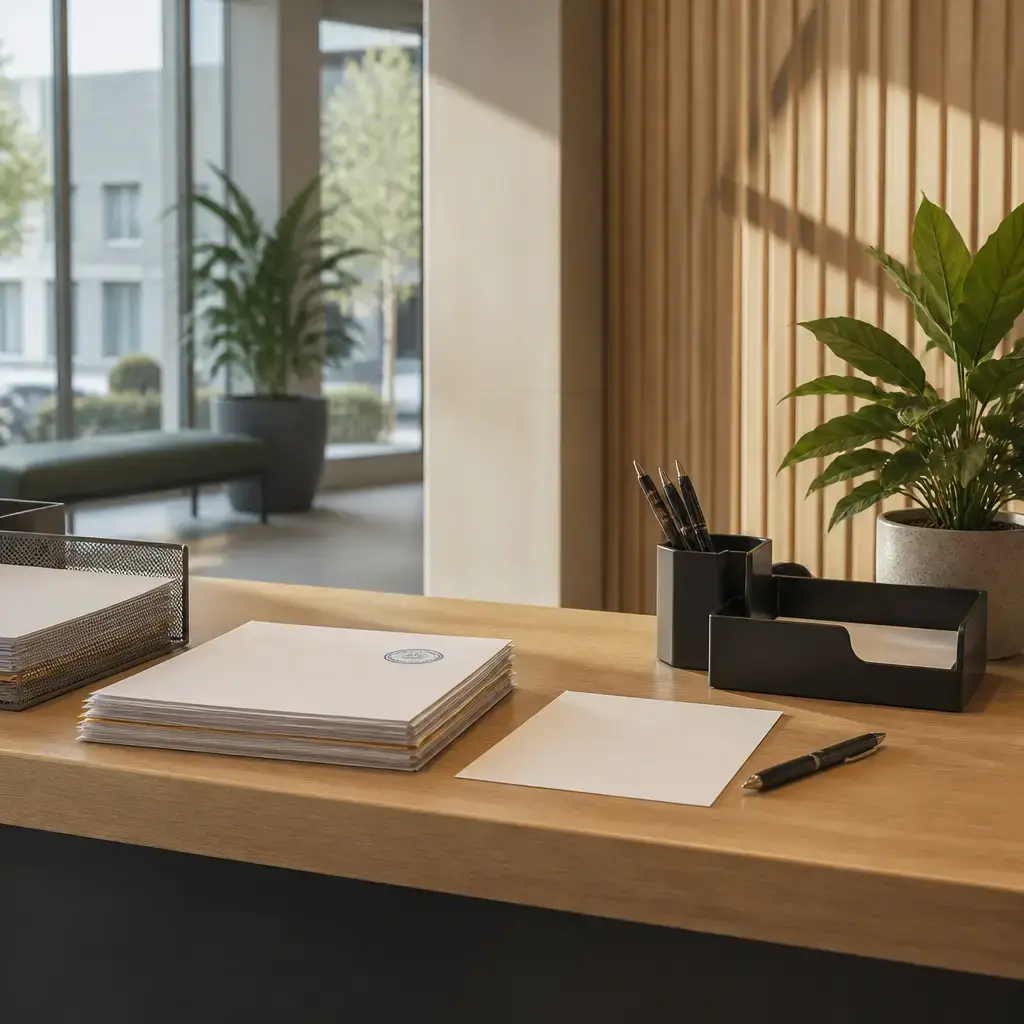
Use Getting a copy of a stamped document to practice Danish conversation, pronunciation, vocabulary, grammar, and quizzes.
Dialogue
Må jeg få en kopi af dette dokument?
moh yai foh en koh-PEE ah DEH-deh doh-koo-MENT? Could I get a copy of this document?Jeg skal se originalen først.
yai skel say oh-ree-gah-LEN furst. I need to see the original first.Skal jeg udfylde en formular?
skel yai OOD-fil-eh en for-moo-LAIR? Should I fill out a request form?Udfyld venligst formularen.
OOD-filt VEN-list for-moo-LAIR-en. Please complete the form.Så kan jeg lave kopien.
soh kan yai LAY-veh koh-PEE-en. Then I can make the copy.Jeg skal kun bruge siden med stemplet.
yai skel koon BROO-eh SEE-en meh STEM-plet. I only need the page with the stamp.Jeg kopierer den side og holder de andre sider samlet.
yai koh-pee-AIR-er den SEE-eh oh HOL-er dee O-dreh SEE-er SAM-let. I will copy that page and keep the other pages together.Håndter venligst originalen forsigtigt.
HON-tair VEN-list oh-ree-gah-LEN for-SIG-tit. Please handle the original carefully.Jeg afleverer det hele samlet igen.
yai ahf-LAY-ver deh HEE-leh SAM-let ee-GEN. I will return everything together.Sentence explanations
Må jeg få en kopi af dette dokument?
Could I get a copy of this document?
- Må jeg
- Could I…? / May I…?
- få
- get; receive
- kopi
- copy
- dette
- this
- dokument
- document
More detail
Må jeg combines the modal verb må with the subject pronoun jeg. Here it asks for permission in a polite request: “Could I…?” or “May I…?” The same pattern is reusable: Må jeg komme ind? — “May I come in?” In this present-tense use, må does not change for the subject; the following verb remains in the infinitive. få means “get” or “receive” here. After må, it is the infinitive form, so Må jeg få ...? is a useful request pattern meaning “Could I get ...?” For example, Må jeg få vand? means “Could I have some water?” kopi is the noun “copy.” Its indefinite singular form is en kopi; its definite singular form is kopien, “the copy.” The article en belongs with the noun phrase in the utterance, while the quoted word itself is only kopi. dette means “this” and modifies the following noun phrase. In this utterance it is the singular neuter form used with dokument; Danish has forms such as denne with common-gender singular nouns and disse with plural nouns. For example, dette brev means “this letter,” while denne bog means “this book.” dokument means “document.” It is a neuter noun, as shown by et dokument; its definite singular form is dokumentet, “the document.” In the utterance, dette dokument means “this document.” The remaining small words connect the selected items: en marks the indefinite singular noun phrase en kopi, and af links that copy to what it is a copy of, dette dokument. In source order, Må jeg få asks permission to receive something, en kopi names that thing, and af dette dokument specifies its source. Together, Må jeg få en kopi af dette dokument? means “Could I get a copy of this document?”
Jeg skal se originalen først.
I need to see the original first.
- Jeg skal
- I need to
- se
- see
- originalen
- the original
- først
- first
More detail
Jeg skal means “I need to” here. Jeg is the first-person singular pronoun “I”, and skal is a modal verb followed by an infinitive. In this sentence, the fixed translation supports the necessity reading. Skal does not change for person: jeg skal means “I need to”, while du skal means “you need to”. Example: Jeg skal ringe senere. — “I need to call later.” se is the infinitive “to see”. After the modal skal, the following verb appears in the infinitive without an infinitive marker equivalent to English “to”. Example: Jeg skal læse. — “I need to read.” originalen means “the original”. Here original is used as a noun, referring to the original item, and -en marks a singular definite common-gender noun: en original — “an original”; originalen — “the original”. The suffix belongs to originalen, not to skal or se. først means “first” in the sense of doing or seeing something before other relevant things. It is an adverb and does not change form here. Example: Jeg ser kopien først. — “I see the copy first.” Together, Jeg skal expresses the speaker’s need, se originalen states what the speaker needs to see, and først gives the order. The complete meaning is: “I need to see the original first.”
Skal jeg udfylde en formular?
Should I fill out a request form?
- Skal jeg
- Should I
- udfylde
- fill out; complete
- formular
- form
More detail
Skal jeg combines skal with jeg. Here skal is the modal verb skulle, used to ask whether the speaker ought to or is expected to do something; jeg means “I” and identifies the speaker as the person who would act. With a modal, Danish places the next verb in the infinitive without at. Example: Skal jeg vente? — “Should I wait?” udfylde is the infinitive of udfylde, meaning “to fill out” or “to complete” a form or other document. Its form does not show the subject here; the subject is supplied by jeg. A related present-tense form is udfylder: Jeg udfylder formularen. — “I am filling out the form.” formular is a noun meaning “form.” In en formular, en introduces an indefinite singular noun; it does not by itself emphasize a numerical count. Danish uses the definite form formularen when referring to a specific form: Udfyld formularen. — “Complete the form.” In the supplied translation, the form is understood as a request form, but that specific type comes from the fixed meaning and context rather than from the noun formular alone. Together, Skal jeg asks about the speaker’s obligation or expected action, and udfylde en formular names that action and its nonspecific form as the object. The whole utterance therefore means: “Should I fill out a request form?” It is a yes-or-no question about whether the speaker should perform that action.
Udfyld venligst formularen.
Please complete the form.
- Udfyld
- complete; fill out
- venligst
- please
- formularen
- the form
More detail
Udfyld is the imperative of udfylde, meaning “fill out” or “complete.” It is the form used to give a direct instruction to one or more people; the subject is normally understood rather than stated. The same verb appears as udfylde after forms such as skal in the preceding question: Skal jeg udfylde en formular? means “Should I fill out a form?” venligst is a polite marker meaning “please.” It softens the instruction, but it is not part of the verb’s imperative form. A reusable pattern is Udfyld venligst ... — “Please fill out ...”. formularen means “the form.” It is the definite singular form of the noun formular; the indefinite form is en formular, as in the preceding context. The ending -en marks common-gender singular definiteness here: en formular → formularen. This identifies a particular form rather than asserting a numeric quantity. Together, the imperative Udfyld, the politeness marker venligst, and the definite noun formularen produce: “Please complete the form.”
Så kan jeg lave kopien.
Then I can make the copy.
- Så
- then
- kan jeg
- I can
- lave
- make
- kopien
- the copy
More detail
Så means “then” here and links the sentence to the preceding situation. At the beginning of a main clause, it occupies the first position; Danish then places the finite verb before the subject: Så kan jeg .... kan jeg means “I can.” kan is the present form of the modal verb kunne (“can, be able to”). It expresses ability or possibility here. The subject is jeg (“I”); kan does not change for person or number. After a modal verb, the following verb normally appears in the infinitive without at. lave means “make” in this sentence. It is the infinitive of lave, so it keeps this form after kan: kan ... lave = “can make.” The same verb can also mean “do” in other contexts, but “make” is the supported meaning here. kopien means “the copy.” The base noun is kopi (“copy”); kopien is its singular definite form, formed with the ending -en. The definite form identifies a particular copy in this context. The noun itself, not lave, carries the definiteness marking. Together, Så + kan jeg + lave + kopien gives “Then I can make the copy.” The fronted Så causes the verb–subject order kan jeg; this is still a statement, not a question, because the opening adverb provides the first position and the sentence continues with the subject and infinitive.
Jeg skal kun bruge siden med stemplet.
I only need the page with the stamp.
- Jeg skal
- I need to
- kun
- only
- bruge
- need / use
- siden
- the page
- med
- with
- stemplet
- the stamp
More detail
Jeg skal expresses the speaker’s need in this sentence. skal is the present form of skulle, a modal verb; with an infinitive, it can express what someone needs, is going to do, or is expected to do. Here the intended meaning is “need,” established by the fixed translation. The subject Jeg is the first-person singular pronoun “I.” kun means “only.” It limits what is needed: the speaker needs the page with the stamp, rather than other material. Its position before bruge gives it scope over the using/needing action. bruge is the infinitive of the verb meaning “use” or, in this construction, “need.” After the modal skal, the following verb appears in the infinitive. A reusable pattern is skal + infinitive, as in Jeg skal arbejde — “I need to work” or “I am going to work,” depending on context. Here bruge is understood as “need,” not simply “use,” because of the fixed translation and the surrounding noun phrase. siden is the exact form in the utterance and means “the page.” Its base form is side, “page”; siden is the definite singular form, formed with the ending -en. The noun is therefore marked as a definite singular page, rather than an indefinite page. For comparison, en side means “a page,” while siden means “the page.” med is the preposition “with.” It introduces an accompanying or identifying feature: the page is characterized by its connection with the stamp. stemplet means “the stamp.” Its base form is the noun stempel, and stemplet is its definite singular form with -et. The -et ending belongs to stempel, not to siden; it marks this noun as definite. The form is singular, as required by the noun’s grammar. Together, siden med stemplet forms the noun phrase “the page with the stamp.” The modal construction Jeg skal bruge expresses the speaker’s need for that item, and kun restricts the need to this specified page. The complete utterance therefore has the intended meaning “I only need the page with the stamp.”
Jeg kopierer den side og holder de andre sider samlet.
I will copy that page and keep the other pages together.
- kopierer
- copy
- den
- that
- side
- page
- holder
- keep
- andre
- other
- sider
- pages
- samlet
- together
More detail
kopierer is the present-tense form of kopiere, “to copy.” Danish present tense can describe a planned or imminent action, so the fixed translation uses “will copy” here. The form does not show a separate future ending. Example: Jeg kopierer dokumentet. — “I am copying the document.” den is a singular common-gender demonstrative/article form. In this utterance, the fixed translation supports the demonstrative meaning “that,” pointing to the page intended by the speaker. In den side, Danish uses the pattern demonstrative + singular indefinite noun: den side — “that page.” side means “page” here. Its useful base form is the singular indefinite form side; the plural is sider, seen later in the sentence. Example: Jeg læser en side. — “I am reading a page.” holder is the present-tense form of holde, “to keep” or “to hold.” Here it means maintaining the pages in a particular state, rather than physically possessing them. Example: Hun holder døren åben. — “She keeps the door open.” andre means “other.” It is the plural form in the inflection chain anden (common-gender singular), andet (neuter singular), andre (plural). In this sentence it modifies the plural noun sider, so andre sider means “other pages.” Example: Jeg vælger en anden side. — “I choose another page.” sider is the plural of side, “pages.” The ending changes the noun from singular side to plural sider; it does not itself mark definiteness. The preceding de in de andre sider supplies the definite “the,” giving “the other pages.” samlet means “together” in the expression holde ... samlet. It describes the state the pages are kept in; here it functions as the complement of holde, not as a separate action. Example: Vi holder papirerne samlet. — “We keep the papers together.” Together, Jeg kopierer den side means “I will copy that page” in the intended context. The coordinated clause og holder de andre sider samlet adds “and keep the other pages together”: og links the two actions, while de andre sider is the object kept in the state samlet. The complete utterance therefore means: “I will copy that page and keep the other pages together.”
Håndter venligst originalen forsigtigt.
Please handle the original carefully.
- Håndter
- handle
- venligst
- please
- originalen
- the original
- forsigtigt
- carefully
More detail
Håndter means “handle” here and is the imperative of håndtere (“to handle”). Danish imperatives commonly use the verb stem without the infinitive marker at: at håndtere → håndter. It directly addresses the person who should perform the action. Example: Håndter glasset forsigtigt. — “Handle the glass carefully.” venligst adds the polite request meaning “please.” It is a separate politeness word and does not change the imperative form. A reusable pattern is imperative + venligst, as in Vent venligst. — “Please wait.” originalen means “the original” in this sentence. Its base noun is original; the ending -en marks the definite singular form of this common-gender noun: en original → originalen. Here it refers to the original item being handled, without adding a separate numeric claim. Compare en original — “an original” and originalen — “the original.” forsigtigt means “carefully” and describes how the handling should be done. It is the adverbial form related to the adjective forsigtig (“careful”); it modifies the action rather than the noun. Example: Hun åbner pakken forsigtigt. — “She opens the package carefully.” Together, Håndter gives the required action, venligst makes it a polite request, originalen identifies what should be handled, and forsigtigt specifies the manner. The complete meaning is: “Please handle the original carefully.”
Jeg afleverer det hele samlet igen.
I will return everything together.
- afleverer
- return / hand in
- det hele
- everything
- samlet
- together
- igen
- again
More detail
afleverer is the present-tense form of aflevere, “to hand in” or “to return.” The ending -er marks the present form; Danish verbs generally do not change for the subject, so the same form can follow different subjects. In this sentence, the fixed translation gives the intended sense “return,” while the preceding context makes returning the original relevant. det hele is a common Danish expression meaning “everything” or “the whole thing.” det is the neuter singular form of the pronoun “it/that,” and hele is the definite form of hel, “whole.” Together they refer to the complete relevant set or object, rather than to one unspecified part. Example: Jeg læser det hele. — “I read everything.” samlet comes from samle, “to gather” or “assemble.” Here it describes the manner of the return: the items are kept together or returned as one combined set. As a past participle, samlet can also function adjectivally in other contexts; its form may change when it directly modifies a noun, but this sentence uses it in the fixed adverbial sense “together.” Example: Send dokumenterne samlet. — “Send the documents together.” igen means “again,” marking a repetition of the returning action. It does not itself specify when the earlier return happened; it only indicates that the action is repeated. Example: Hun kommer igen. — “She is coming back again.” The utterance follows the reusable pattern subject + present-tense verb + det hele + manner + igen: Jeg afleverer det hele samlet igen. The subject Jeg is “I”; afleverer supplies the returning action, det hele identifies everything as the returned content, samlet says that it is returned together, and igen says that this happens again. Thus the complete meaning is “I will return everything together again.” Danish present tense can express a planned or intended future action when the context supports that reading; here that is the reading fixed by the translation.
Grammar Points
kopi → kopien; original → originalen
originalen og kopien
oh-ree-gah-LEN oh koh-PEE-enthe original and the copy
Danish often marks a definite noun by adding a suffix: kopi becomes kopien, and original becomes originalen.
udfylde → Udfyld
Udfyld formular
OOD-filt for-moo-LAIRFill out the form
The Danish imperative is often formed by removing -e from the infinitive: udfylde becomes Udfyld.
Danish Vocabulary
Jeg skal kun bruge siden med stemplet.
- Gender
- neuter
Må jeg få en kopi af dette dokument?
- Gender
- common
Skal jeg udfylde en formular?
Må jeg få en kopi af dette dokument?
- Gender
- common
Må jeg få en kopi af dette dokument?
Jeg kopierer den side og holder de andre sider samlet.
Så kan jeg lave kopien.
- Gender
- common
Jeg skal se originalen først.
Jeg skal se originalen først.
- Gender
- common
Jeg skal kun bruge siden med stemplet.
- Gender
- neuter
Jeg skal kun bruge siden med stemplet.
Skal jeg udfylde en formular?
Quiz
Word Order
Arrange the words in the correct order.
I need to see the original first.
Show Answer
Jeg skal se originalen først.Should I fill out a request form?
Show Answer
Skal jeg udfylde en formular?Please complete the form.
Show Answer
Udfyld venligst formularen.Spelling
Tap the letters to spell the word.
fill out
Show Answer
udfyldecopy
Show Answer
kopistamp
Show Answer
stempletdocument