10 minutes free every day
Continue audio lessons in the app
Word explanations appear automatically in sync with the audio.
No login required · synced translations · playback with the screen locked
Choose your learning language and open this lesson in the app.

About This Lesson
Use Planning a Photography Walk to practice German conversation, pronunciation, vocabulary, grammar, and quizzes.
Dialogue
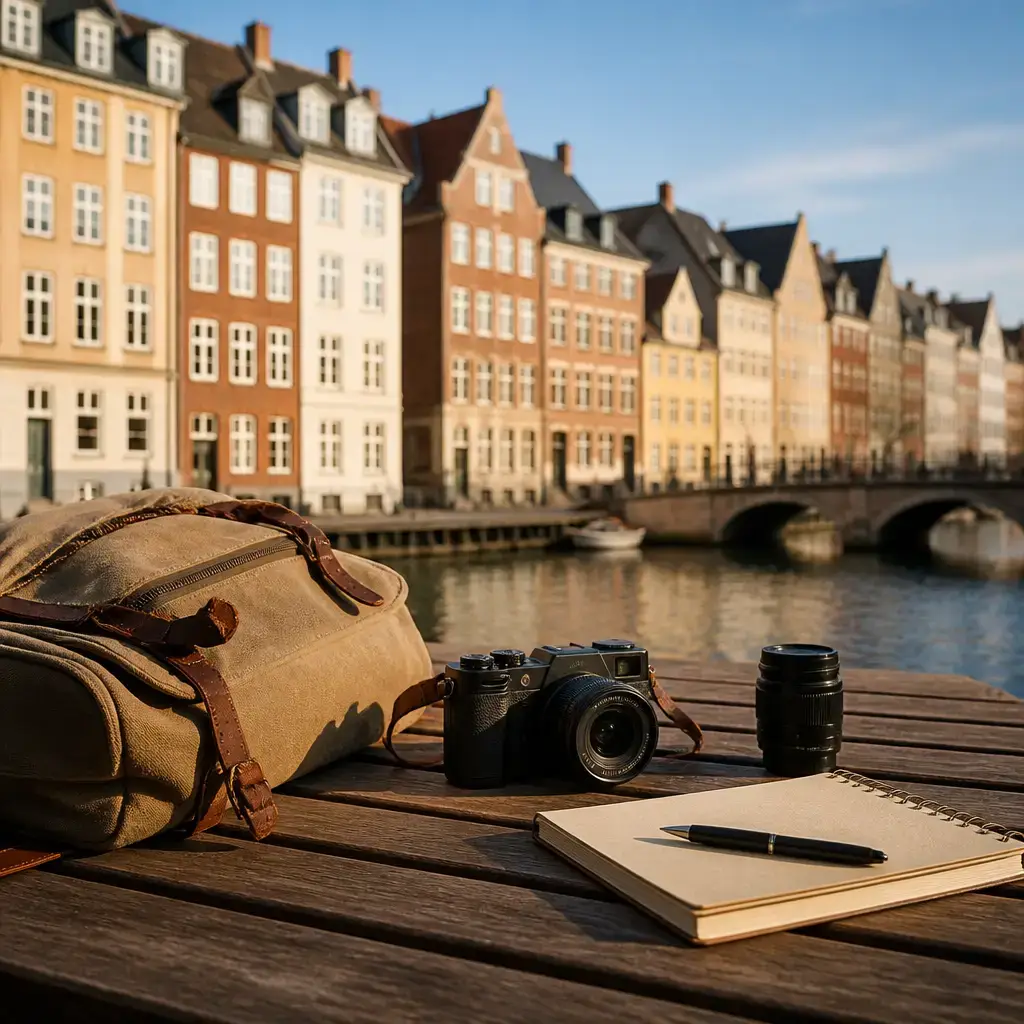
Möchtest du morgen mit auf einen Fotospaziergang kommen?
MUERKH-test doo MOR-gen mit owf EYE-nen FOH-toh-shpah-TSEER-gahng KOH-men? Would you like to come on a photo walk tomorrow?Ich brauche mehr Übung beim Fotografieren.
Ikh BROW-khuh mair MOOR yoo-boong BYME foh-toh-grah-FEER-en. I could use more practice with photography.Das Licht am Morgen sollte für Straßenfotos besser sein.
Dahs likht ahm MOR-gen ZHOL-tuh fyoor SHTRAH-sen-FOH-tohs BES-ser zine. Morning light should be better for street photos.Was sollen wir zuerst fotografieren?
Vahs ZHOL-len veer tsoo-AIRST foh-toh-grah-FEER-en? What should we photograph first?Wir können mit alten Gebäuden anfangen.
Veer KURN-en mit AHL-ten geh-BOW-den AHN-fahng-en. We can start with old buildings.Ich bringe meine kleine Kamera und einen Ersatzakku mit.
Ikh BRING-uh MY-nuh KLY-nuh kah-MAIR-ah oont EYE-nen air-ZAHTS-ah-koo mit. I'll bring my small camera and an extra battery.Treffen wir uns, bevor es auf den Straßen voll wird.
TREF-fen veer oons, beh-FOHR ess owf dayn SHTRAH-sen foll virt. Let's meet before the streets get busy.Dann können wir später unsere Fotos vergleichen.
Dahn KURN-en veer SHPAY-ter OON-zuh-reh FOH-tohs fer-GLY-khen. Then we can compare our photos later.Sentence explanations
Möchtest du morgen mit auf einen Fotospaziergang kommen?
Would you like to come on a photo walk tomorrow?
- Möchtest du
- would you like
- morgen
- tomorrow
- mit … kommen
- come along
- auf
- on/to (an activity)
- Fotospaziergang
- photo walk
More detail
Möchtest du expresses a polite or friendly “would you like …?” question. möchtest is the second-person singular form used with du; it is the subjunctive-II form of mögen in this request pattern. The base verb mögen can mean “to like,” while möchtest commonly introduces a wish or invitation. Example: Möchtest du einen Kaffee? — “Would you like a coffee?” morgen means “tomorrow” and places the proposed activity in the following day. It is an adverb, so it does not change form. Example: Wir treffen uns morgen. — “We’re meeting tomorrow.” mit ... kommen means “come along” or “join someone in coming.” Here mit is separated from kommen by the activity phrase auf einen Fotospaziergang; together they form the invitation to join. This pattern can be reused with another activity: Möchtest du mit ins Kino kommen? — “Would you like to come along to the cinema?” auf is the preposition used here for going or coming to an event or activity. With the masculine singular article einen, it takes the accusative: auf einen Fotospaziergang. This is the same pattern as auf einen Spaziergang gehen — “go for a walk.” Fotospaziergang is a compound noun meaning a walk undertaken for photography. Its parts are Foto (“photo”) and Spaziergang (“walk”), but the observed compound is one noun and is written with a capital letter. In this sentence it follows einen, the masculine singular accusative form of the indefinite article, required after auf for the intended movement toward the activity. Example: Wir machen einen Fotospaziergang. — “We’re going on a photo walk.” Together, Möchtest du asks about the other person’s willingness, morgen specifies the time, and mit ... kommen presents joining the speaker for auf einen Fotospaziergang. The whole utterance therefore means: “Would you like to come on a photo walk tomorrow?”
Ich brauche mehr Übung beim Fotografieren.
I could use more practice with photography.
- Ich brauche
- I need / I could use
- mehr
- more
- Übung
- practice
- beim Fotografieren
- with photography
More detail
Ich brauche means “I need” here, and in the fixed translation it naturally conveys “I could use.” brauche is the first-person singular present form of brauchen (“to need”): ich brauche, du brauchst, er/sie braucht. Example: Ich brauche Hilfe. — “I need help.” mehr means “more.” It is the comparative form related to viel (“much/many”), but unlike many German adjectives, mehr does not take an ending in this use. Example: Ich brauche mehr Zeit. — “I need more time.” Übung means “practice” here. It is a feminine noun: die Übung; its plural is die Übungen. The word can also mean an exercise or drill when referring to one specific task. Example: Diese Übung ist schwierig. — “This exercise is difficult.” beim Fotografieren expresses “with photography” or “while taking photographs.” beim is the contraction of bei dem. Fotografieren is a nominalized infinitive, so it is capitalized and functions as a noun; it comes from the verb fotografieren (“to photograph”). After bei, the noun phrase is in the dative, hence bei dem Fotografieren → beim Fotografieren. Example: Beim Fotografieren brauche ich gutes Licht. — “When taking photographs, I need good light.” Together, Ich brauche mehr Übung says “I need more practice,” and beim Fotografieren specifies the activity: “with photography.” The complete utterance therefore means “I could use more practice with photography.”
Das Licht am Morgen sollte für Straßenfotos besser sein.
Morning light should be better for street photos.
- Licht
- light
- Morgen
- morning
- sollte
- should
- Straßenfotos
- street photos
- besser
- better
- sein
- be
More detail
Licht means “light” here. It is the noun in Das Licht; German nouns are capitalized. Its plural is Lichter, used when referring to multiple lights rather than one kind or source of light. Morgen means “morning.” In am Morgen, the form am combines an and dem, giving the time expression “in the morning.” The phrase am Morgen describes when the light is being considered; it does not make Morgen the grammatical subject. sollte is the form of the modal verb sollen used here for “should.” With the intended recommendation or expectation meaning, sollte expresses that the statement is expected to be true, rather than asserting it as certain. The same written form can also serve another use of sollen in other contexts, so its meaning comes from the sentence. With a plural subject, the corresponding form is sollten. Straßenfotos means “street photos.” It is a German compound noun: Straße means “street” and Foto means “photo”; Straßenfotos is the plural form, while the singular is Straßenfoto. The linking form Straßen- appears inside the compound, so the whole word is treated as one noun. besser means “better.” It is the comparative form of gut (“good”): gut → besser → am besten (“best”). Here it compares the expected quality of the morning light with some relevant alternative or standard; the comparison is understood from context and is not stated explicitly. sein means “be.” It is the infinitive of sein and follows the modal verb sollte, as in the reusable pattern sollte ... sein (“should be ...”). The adjective besser describes the subject through this verb. Together, Das Licht am Morgen is “the light in the morning,” and für Straßenfotos specifies its intended use: “for street photos.” The modal construction sollte ... besser sein says that this light is expected to be better for that purpose. Thus the complete utterance means: “Morning light should be better for street photos.”
Was sollen wir zuerst fotografieren?
What should we photograph first?
- Was
- what
- sollen wir
- should we
- zuerst
- first
- fotografieren
- photograph
More detail
Was asks for an unspecified thing that is the object of the action: “what”. In this sentence, it asks what is to be photographed. Was does not change for grammatical gender or number. Compare wer (“who”), which asks about a person. sollen wir combines the finite modal verb sollen with wir (“we”). Here sollen asks what the speakers ought to or are expected to do; it does not by itself assert that they must do it. The reusable form is wir sollen (“we should/are supposed to”), as in Sollen wir anfangen? — “Should we start?” zuerst is an adverb meaning “first” or “before the other actions”. Here it orders the photographing: the question asks what to photograph before the other things. Example: Wir essen zuerst. — “We eat first.” fotografieren means “to photograph” and is the infinitive used with sollen. Its present forms include ich fotografiere (“I photograph”) and wir fotografieren (“we photograph”). With a modal verb in a German main-clause question, the finite modal verb appears in the question’s verb position and the accompanying infinitive comes at the end. The reusable pattern is Was sollen wir + infinitive? (“What should we + verb?”). Together, Was asks for the thing, sollen wir asks what the speakers should do, zuerst sets the order, and fotografieren names the action. The complete utterance means: “What should we photograph first?”
Wir können mit alten Gebäuden anfangen.
We can start with old buildings.
- Wir können
- we can
- mit
- with
- alten
- old
- Gebäuden
- buildings
- anfangen
- start; begin
More detail
Wir können: wir means “we” and is the first-person plural subject. können is the present-tense form of können (“to be able to; can”) for wir; here it expresses ability or possibility. With a modal verb such as können, the other verb stays in the infinitive and moves to the end: Wir können warten. — “We can wait.” mit: This preposition means “with” and takes the dative case. Here it introduces what the speakers will begin with. For example, mit dem ersten Kapitel means “with the first chapter.” alten: This is the adjective alt (“old”) with the dative plural ending -en. The ending agrees with the dative plural phrase after mit: mit alten .... The adjective ending therefore reflects the phrase’s grammatical form, while Gebäuden also shows the plural and dative form of the noun. Gebäuden: This is the plural of Gebäude (“building”). After mit, it is dative plural, written Gebäuden; the added -n is part of this dative plural form. The singular dative is mit einem Gebäude (“with a building”), while the plural is mit Gebäuden (“with buildings”). anfangen: This infinitive means “to start” or “to begin.” It is a separable verb: without a modal, the present-tense form commonly separates as Wir fangen mit alten Gebäuden an. — “We start with old buildings.” After können, it remains the complete infinitive anfangen at the end. Together, Wir können expresses “we can,” mit alten Gebäuden specifies “with old buildings,” and anfangen supplies the action “start.” The whole utterance therefore means “We can start with old buildings.”
Ich bringe meine kleine Kamera und einen Ersatzakku mit.
I'll bring my small camera and an extra battery.
- Ich
- I
- bringe … mit
- bring along
- meine
- my
- kleine
- small
- Kamera
- camera
- Ersatzakku
- extra battery
More detail
Ich means “I” here, the speaker as the subject. German subject pronouns include ich (“I”), du (“you,” singular informal), and wir (“we”); the form ich itself does not show whether the speaker is male or female. bringe and mit belong together as the separable verb mitbringen, “to bring along.” In this sentence, bringe is the first-person singular present form of bringen (“bring”), while the prefix mit moves to the end of the clause: Ich bringe ... mit. This pattern is reusable: Ich bringe Wasser mit. — “I’ll bring water along.” The present tense can express a planned future action when the time is understood from context. meine means “my” and agrees with the noun it determines. Here it accompanies feminine singular Kamera in the accusative, because the camera is what is being brought. The related form mein is used with some other noun forms, for example mein Akku (“my battery”); the possessive form is selected by the noun’s grammatical gender, number, and case, not simply by the speaker’s gender. kleine means “small” here. Its base form is klein; kleine is the adjective form used before feminine singular Kamera in this noun phrase. For example, eine kleine Tasche means “a small bag.” Kamera means “camera.” It is a feminine noun in German, so the phrase uses meine kleine Kamera: meine marks the possessive form and kleine matches the noun phrase in this context. The noun is capitalized because German nouns are capitalized. Ersatzakku means “spare battery” or “extra battery.” It is a compound noun: Ersatz contributes the idea of a replacement or spare, and Akku means “rechargeable battery.” The compound’s grammatical gender is masculine, inherited from its final element, Akku; this is why the phrase has einen before it in the accusative: einen Ersatzakku. The indefinite article einen marks the masculine accusative form here; it does not by itself add a separate numerical emphasis such as “one.” Putting the chunks together, Ich bringe meine kleine Kamera und einen Ersatzakku mit has the structure “I bring my small camera and an extra battery along.” und coordinates the two objects, and the separated mit completes mitbringen at the end. The fixed translation presents this as the speaker’s plan: “I’ll bring my small camera and an extra battery.”
Treffen wir uns, bevor es auf den Straßen voll wird.
Let's meet before the streets get busy.
- Treffen
- meet
- uns
- each other
- bevor
- before
- es
- it
- auf
- on
- Straßen
- streets
- voll
- busy; full
- wird
- gets; becomes
More detail
Treffen wir uns is the first-person plural imperative construction of treffen (“to meet”), used here as a proposal: “Let’s meet ...”. The form Treffen is also the infinitive, but here the construction with wir and the context make it a “let’s” proposal. A regular statement uses different word order: Wir treffen uns morgen. — “We are meeting tomorrow.” uns is the accusative form of wir and means “each other” in this reciprocal meeting construction. For one speaker, the corresponding first-person singular reflexive form is mich: Ich treffe mich mit ihr. — “I am meeting with her.” bevor introduces a subordinate time clause meaning “before”. Here, the proposed meeting is to happen before the streets become busy. In a German subordinate clause introduced by bevor, the finite verb normally goes to the end. es is an impersonal subject in es auf den Straßen voll wird. It does not identify a particular person or object; this construction describes the streets reaching a busy state. Another impersonal use is Es regnet. — “It is raining.” auf combines with den Straßen to express location: “on the streets”. In this use, auf governs the dative, rather than the accusative used for movement onto a place. Straßen is the plural of Straße (“street”). In the dative plural, the phrase is auf den Straßen; den marks the dative plural, while Straßen is the plural noun form. voll means “full” here, with the context-specific sense “busy” when describing streets. As a predicative adjective after werden, it has no adjective ending: Die Straßen werden voll. — “The streets are getting busy.” wird is the third-person singular present form of werden, which means “to become” or “to get” in this construction. Its subject is the impersonal es, so the form is singular. The finite form wird is at the end because this is the subordinate clause introduced by bevor. For example, Es wird dunkel. means “It is getting dark.” Together, Treffen wir uns proposes meeting, and bevor es auf den Straßen voll wird gives the time limit: the meeting should happen before the streets get busy. The complete meaning is “Let’s meet before the streets get busy.”
Dann können wir später unsere Fotos vergleichen.
Then we can compare our photos later.
- Dann
- then
- können wir
- we can
- später
- later
- unsere
- our
- Fotos
- photos
- vergleichen
- compare
More detail
Dann means “then” here, referring to a later point in the situation. It can also introduce a consequence in other contexts. Example: Dann gehen wir. — “Then we’ll go.” können wir combines the modal verb können (“can, be able to”) with wir (“we”). können is finite here and agrees with the plural subject wir; its infinitive is können. In a main clause beginning with Dann, the finite verb remains in second position, so the order is Dann können wir ..., not Dann wir können .... With a modal verb, the other verb normally appears as an infinitive at the end: Wir können warten. — “We can wait.” später means “later” and places the comparison at a later time. It is an adverb, so it does not change for number or gender. Example: Wir sprechen später. — “We’ll talk later.” unsere means “our” and belongs to the first-person plural possessive unser-. In this sentence it modifies plural Fotos; the form unsere is used with a plural noun in this case. Possessive determiners take forms according to the noun phrase’s grammatical features and case. Example: Unsere Bücher sind hier. — “Our books are here.” Fotos means “photos.” It is the plural of das Foto; the plural form is die Fotos. In this sentence, Fotos is the object being compared. Example: Ich sehe die Fotos. — “I see the photos.” vergleichen means “compare.” This is its infinitive form, required here after the modal können; it is not itself marked for the subject. The finite form appears when there is no modal: Wir vergleichen die Bilder. — “We compare the pictures.” Together, Dann können wir gives “Then we can,” später adds the time “later,” unsere Fotos identifies the photos as belonging to “us,” and vergleichen supplies the action at the end of the modal construction. The complete meaning is: “Then we can compare our photos later.”
Grammar Points
mitbringen → bringe ... mit
Ich bringe eine kleine Kamera mit.
Ikh BRING-uh EYE-nuh KLY-nuh kah-MAIR-ah mit.I am bringing a small camera along.
Bei trennbaren Verben steht der Präfix am Satzende: mitbringen wird zu bringe ... mit.
bevor + Verb am Satzende
Treffen wir uns, bevor wir anfangen?
TREF-fen veer oons, beh-FOHR veer AHN-fahng-en?Shall we meet before we start?
Nach bevor steht das konjugierte Verb im Nebensatz am Ende: bevor wir anfangen.
German Vocabulary
Wir können mit alten Gebäuden anfangen.
Wir können mit alten Gebäuden anfangen.
Das Licht am Morgen sollte für Straßenfotos besser sein.
Ich brauche mehr Übung beim Fotografieren.
Ich brauche mehr Übung beim Fotografieren.
Möchtest du morgen mit auf einen Fotospaziergang kommen?
Möchtest du morgen mit auf einen Fotospaziergang kommen?
Das Licht am Morgen sollte für Straßenfotos besser sein.
Möchtest du morgen mit auf einen Fotospaziergang kommen?
Das Licht am Morgen sollte für Straßenfotos besser sein.
Ich brauche mehr Übung beim Fotografieren.
Was sollen wir zuerst fotografieren?
Quiz
Word Order
Arrange the words in the correct order.
I could use more practice with photography.
Show Answer
Ich brauche mehr Übung beim Fotografieren.What should we photograph first?
Show Answer
Was sollen wir zuerst fotografieren?We can start with old buildings.
Show Answer
Wir können mit alten Gebäuden anfangen.Spelling
Tap the letters to spell the word.
better
Show Answer
besserpractice
Show Answer
Übungstreet photo
Show Answer
Straßenfotoslight