10 minutes free every day
Continue audio lessons in the app
Word explanations appear automatically in sync with the audio.
No login required · synced translations · playback with the screen locked
Choose your learning language and open this lesson in the app.

About This Lesson
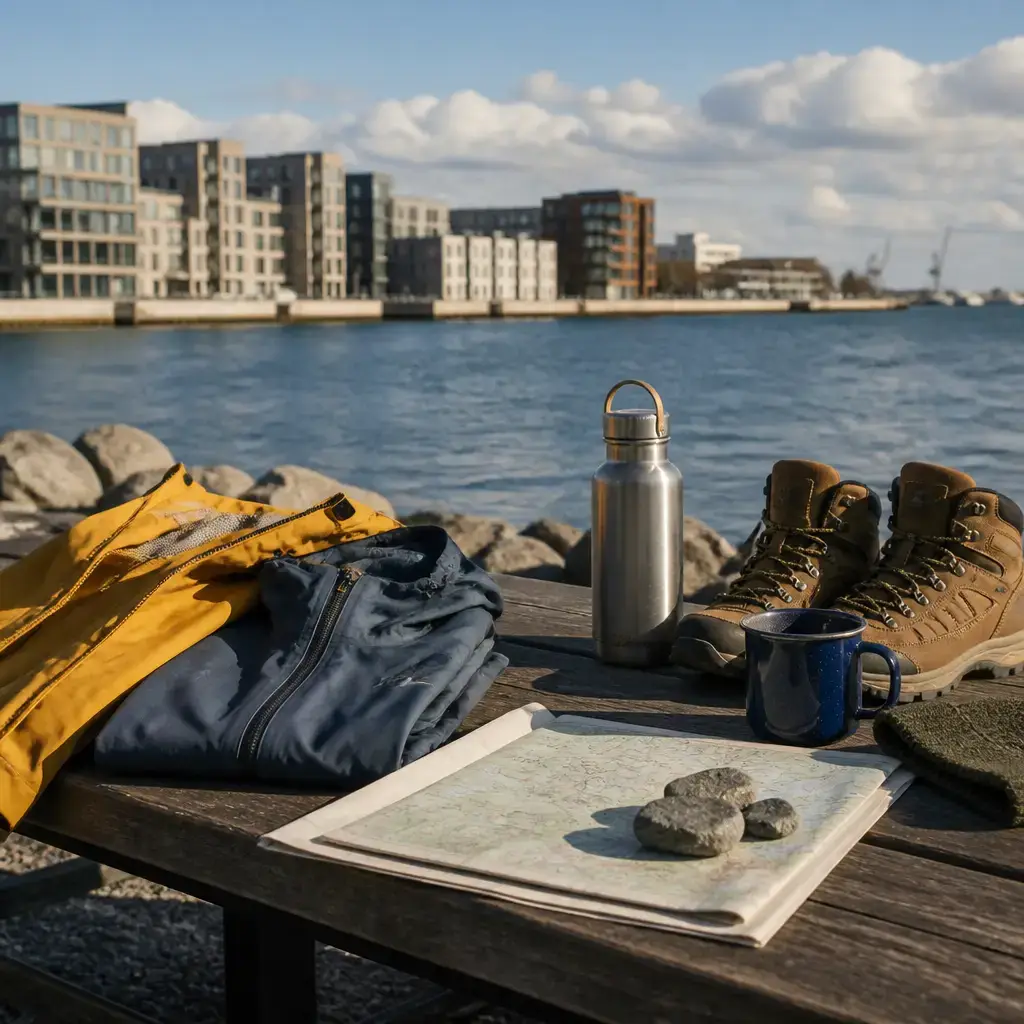
Use Preparing for Changeable Hiking Weather to practice German conversation, pronunciation, vocabulary, grammar, and quizzes.
Dialogue
Die Wettervorhersage für die Wanderung ändert sich ständig, mit Sonne und möglichen Schauern.
dee VET-er-for-HAY-zuh-guh fyoor dee VAN-der-oong END-ert zikh SHTEN-dikh, mit ZON-uh oont MURK-likh-en SHOU-ern. The forecast for the hike keeps changing, with sun and possible showers.Zieh mehrere Schichten an und bring eine wasserdichte Jacke mit.
Tseeh MAY-ruh-ruh SHIKH-ten an oont bring EYE-nuh VAS-ser-dikh-tuh YAK-uh mit. Wear layers and bring a waterproof jacket.Der Weg ist offen, aber der höhere Abschnitt kann schlammig sein.
dair vayk ist OFF-en, AH-ber dair HUR-uh-ruh AP-shnit kahn SHLAM-ikh zine. The trail is open, but the higher section may be muddy.Wir sollten langsam gehen, besonders auf den bergab führenden Abschnitten.
veer ZOL-ten LANG-zahm GAY-en, beh-ZON-ders owf dayn bairg-AHP FYUR-en-den AP-shnit-ten. We should take it slowly, especially on the downhill parts.Wenn das Wetter schlecht wird, können wir am Aussichtspunkt umkehren.
ven dahs VET-er SHLEKHT virt, KUR-nen veer am OWS-zikhts-poongkt oom-KAYR-en. If the weather turns bad, we can turn back at the viewpoint.Lass uns das sagen, bevor wir losgehen, damit niemand unter Druck steht, weiterzugehen.
lahs oons dahs ZAH-gen, beh-FOR veer LOHS-gay-en, dah-MIT NEE-mahnt OON-ter droog shtayt, VY-ter-TSOO-GAY-en. Let's say that before we start, so no one feels pressured to continue.Sollen wir die Gruppe daran erinnern, keine Freizeitschuhe zu tragen?
ZOL-en veer dee GROO-puh dah-RAHN air-IN-ern, KIGH-nuh FRY-tsite-SHOO-uh tsoo TRAH-gen? Should we remind the group not to wear casual shoes?Bitte sie, geeignete Schuhe zu tragen; schlammige Wege können rutschig sein.
BIT-tuh zee, guh-IGHG-nuh-tuh SHOO-uh tsoo TRAH-gen; SHLAM-ikh-uh VAY-guh KUR-nen ROOT-shikh zine. Ask them to wear proper shoes; muddy trails can be slippery.Heute Abend würde eine Erinnerung ans Packen helfen.
HOY-tuh AH-bent VUR-duh EYE-nuh air-IN-uh-roong ahns PAK-en HEL-fen. A packing reminder tonight would help.Schick sie früh genug, damit sich alle vorbereiten können.
SHIK zee fryoo guh-NOOK, dah-MIT zikh AH-luh for-buh-RITE-en KUR-nen. Send it early enough for everyone to prepare.Sentence explanations
Die Wettervorhersage für die Wanderung ändert sich ständig, mit Sonne und möglichen Schauern.
The forecast for the hike keeps changing, with sun and possible showers.
- Wettervorhersage
- forecast
- Wanderung
- hike
- ändert sich
- changes
- ständig
- constantly
- Sonne
- sun
- möglichen
- possible
- Schauern
- showers
More detail
Wettervorhersage means “forecast” here, specifically a weather forecast. It is a feminine compound noun: die Wettervorhersage, plural die Wettervorhersagen. The noun itself is the subject of the sentence, so the singular form goes with ändert. Wanderung means “hike” here. It is feminine: die Wanderung. After für, German uses the accusative: für die Wanderung means “for the hike.” The article is still die because feminine singular has the same form in the nominative and accusative. The related verb is wandern, “to hike.” ändert sich means “changes” or, in this sentence, “keeps changing.” The base verb is sich ändern, “to change.” In the present tense, ändert is the third-person singular form used with die Wettervorhersage; sich is the reflexive pronoun belonging to this verb. For example: Der Plan ändert sich. — “The plan is changing.” ständig is an adverb meaning “constantly” or “continually.” It describes how often the forecast changes and does not inflect here. It can also be used with other verbs, for example: Sie arbeitet ständig. — “She is constantly working.” Sonne means “sun.” In this weather-listing context, mit Sonne means “with sun” or “with sunny conditions.” mit introduces the accompanying conditions and requires the dative; Sonne is feminine, and its form is unchanged here because feminine singular has the same form in this case. möglichen means “possible.” It is the inflected form of the adjective möglich. Here it modifies Schauern in the dative plural phrase mit möglichen Schauern, so the adjective takes the plural dative ending -en. Compare the basic form möglich with the plural-dative form mit möglichen .... Schauern means “showers” here. The singular is der Schauer, and the plural is die Schauer; after mit, the plural dative adds -n: mit Schauern. Thus mit möglichen Schauern means “with possible showers.” Together, Die Wettervorhersage für die Wanderung is “the forecast for the hike,” and ändert sich ständig says that it keeps changing. The final group, mit Sonne und möglichen Schauern, adds the accompanying forecast conditions: sun and possible showers. The complete meaning is: “The forecast for the hike keeps changing, with sun and possible showers.”
Zieh mehrere Schichten an und bring eine wasserdichte Jacke mit.
Wear layers and bring a waterproof jacket.
- Zieh … an
- put on / wear
- mehrere
- several
- Schichten
- layers
- bring … mit
- bring along
- wasserdichte
- waterproof
- Jacke
- jacket
More detail
Zieh … an is the informal singular imperative of the separable verb anziehen, meaning “put on” or “wear” here. The prefix an- moves to the end in this form: Zieh eine Jacke an. — “Put on a jacket.” The form zieh addresses one person using du; the polite or plural form would use a different imperative construction. mehrere means “several” and modifies the plural noun Schichten. It indicates more than one layer without stating an exact number. Schichten is the plural of Schicht, “layer.” A useful singular/plural contrast is eine Schicht — “one layer” and mehrere Schichten — “several layers.” bring … mit is the informal singular imperative of the separable verb mitbringen, “bring along.” As with anziehen, the prefix mit- appears at the end: Bring einen Pullover mit. — “Bring a sweater along.” wasserdichte means “waterproof” here. It is the adjective wasserdicht, with the ending -e because it stands before the feminine accusative noun Jacke after eine: eine wasserdichte Jacke. Jacke means “jacket”; its plural is Jacken. Together, Zieh mehrere Schichten an means “Wear several layers,” and bring eine wasserdichte Jacke mit means “bring a waterproof jacket along.” The two imperative clauses are joined by und, so the utterance gives two practical instructions: wear several layers and bring a waterproof jacket. In this weather-related setting, the wording is a direct, informal recommendation or instruction.
Der Weg ist offen, aber der höhere Abschnitt kann schlammig sein.
The trail is open, but the higher section may be muddy.
- Weg
- trail; path
- ist
- is
- offen
- open
- aber
- but
- höhere
- higher
- Abschnitt
- section
- kann
- may; can
- schlammig
- muddy
- sein
- be
More detail
Weg means a path or trail. The observed form is singular; its common plural is Wege. In this sentence, der Weg is the trail being described. ist is the third-person singular present form of sein (“to be”): ich bin, du bist, er/sie/es ist, wir/sie sind. It links the singular subject to a description. offen means open. Here it describes the trail’s condition or accessibility. A useful opposite is geschlossen (“closed”): Der Weg ist geschlossen. — “The trail is closed.” aber connects two contrasting statements and means “but.” The pattern A ist ..., aber B ... lets the second clause add a contrast to the first. höhere is the comparative form of hoch (“high”): hoch → höher → am höchsten. In der höhere Abschnitt, it means “the higher section,” comparing this section with another height or level. The adjective has the ending -e because it is masculine singular nominative after the definite article der; the comparison itself is carried by höher, not by Abschnitt. Abschnitt means a section or part of a route. Its plural is Abschnitte. In this sentence, it is the higher section of the trail, not the whole trail. kann is the third-person singular present form of the modal verb können. With an infinitive, kann ... sein expresses possibility: “may/can be.” The pattern is kann + infinitive, with the infinitive at the end of the clause. Der Abschnitt kann nass sein. — “The section may be wet.” schlammig means muddy. It is an adjective describing the possible condition of the section. Der Weg ist schlammig. — “The trail is muddy.” sein is the infinitive “to be.” After the modal kann, German uses the infinitive rather than another finite form: kann schlammig sein means “may be muddy.” Together, Der Weg ist offen says that the trail is open, while aber der höhere Abschnitt kann schlammig sein contrasts this with a possibility about a particular, higher section. The complete meaning is: “The trail is open, but the higher section may be muddy.”
Wir sollten langsam gehen, besonders auf den bergab führenden Abschnitten.
We should take it slowly, especially on the downhill parts.
- Wir sollten
- we should
- langsam
- slowly
- gehen
- go
- besonders
- especially
- bergab führenden
- leading downhill
- Abschnitten
- sections
More detail
Wir sollten expresses a recommendation: “we should.” Wir is the first-person plural pronoun “we,” and sollten is the form of sollen used here to give advice or make a suggestion. The following verb stays in the infinitive. Example: Wir sollten früh losgehen. — “We should set off early.” langsam means “slowly” here and modifies gehen. German uses the same form langsam as an adjective and as an adverb; no adverb ending is added. Example: Bitte fahr langsam. — “Please drive slowly.” gehen is the infinitive “to go” or “to walk.” With the modal verb sollten, it remains in the infinitive and comes later in the clause. Example: Wir sollten weitergehen. — “We should continue walking.” besonders means “especially” and focuses attention on a particular part of the situation. Example: Das ist besonders wichtig. — “That is especially important.” bergab führenden is a modifier meaning “leading downhill” here. bergab means “downhill.” führenden comes from führen (“to lead”) through the present participle führend; here it functions adjectivally. Its -en ending is the weak adjective ending required in the dative plural phrase den ... Abschnitten. Abschnitten is the dative plural of Abschnitt, “section” or “part.” The preposition auf takes the dative here because the phrase describes being or walking on particular sections, not movement onto them. The article is den, and the noun has the plural dative ending -n. Example: Auf den steilen Abschnitten gehen wir langsam. — “On the steep sections, we walk slowly.” Together, Wir sollten langsam gehen means “We should go slowly,” and besonders auf den bergab führenden Abschnitten specifies where this matters most: “especially on the sections leading downhill.” The complete utterance therefore means: “We should take it slowly, especially on the downhill parts.”
Wenn das Wetter schlecht wird, können wir am Aussichtspunkt umkehren.
If the weather turns bad, we can turn back at the viewpoint.
- Wenn
- if; when
- Wetter
- weather
- schlecht
- bad
- wird
- becomes; turns
- können wir
- we can
- Aussichtspunkt
- viewpoint
- umkehren
- turn back
More detail
Wenn introduces a condition: “if” or, for a repeated situation, “when.” In a subordinate clause, the finite verb normally goes to the end. Example: Wenn es regnet, bleiben wir hier. — “If it rains, we stay here.” Wetter means “weather” and is a neuter noun: das Wetter. Example: Das Wetter ist gut. — “The weather is good.” schlecht means “bad” here, describing the weather. Its opposite is gut (“good”). In schlechtes Wetter, the adjective takes -es before the neuter noun without an article; in the supplied sentence, it follows wird, so it has no attributive ending. wird is the third-person singular present form of werden (“become,” “turn”). With an adjective, schlecht werden means “become bad” or “turn bad.” The subject is das Wetter, which is grammatically singular. This is the change-of-state use of werden, not its future-auxiliary use. Example: Der Himmel wird dunkel. — “The sky is becoming dark.” können wir means “we can.” können is the first-person plural present form of the modal verb können, and wir is “we.” A modal verb combines with an infinitive, which normally goes to the end of the main clause: Wir können warten. — “We can wait.” Aussichtspunkt means “viewpoint.” It is a masculine noun: der Aussichtspunkt. With am, the phrase am Aussichtspunkt means “at the viewpoint”; am is the contraction of an dem, with the dative marking the location. Example: Wir treffen uns am Aussichtspunkt. — “We meet at the viewpoint.” umkehren means “turn back” or “reverse direction.” It is an infinitive and remains together after the modal: Wir können umkehren. — “We can turn back.” Together, Wenn das Wetter schlecht wird gives the condition “If the weather turns bad.” The main clause können wir am Aussichtspunkt umkehren says that we can turn back at the viewpoint. The complete utterance is: “If the weather turns bad, we can turn back at the viewpoint.”
Lass uns das sagen, bevor wir losgehen, damit niemand unter Druck steht, weiterzugehen.
Let's say that before we start, so no one feels pressured to continue.
- Lass uns
- let’s
- das
- that; it
- sagen
- say
- bevor
- before
- wir
- we
- losgehen
- set off; leave
- damit
- so that
- niemand
- no one
- unter Druck
- under pressure
- steht
- is; stands
- weiterzugehen
- to continue going
More detail
Lass uns is a reusable way to suggest an action involving the speaker and the listener or listeners: Lass uns ... = “let’s ...”. Lass is the informal singular imperative of lassen; uns means “us” here. The following sagen supplies the suggested action. This is not the same as simply stating wir sagen (“we say”): the Lass uns construction makes it a proposal. das is the demonstrative pronoun “that” in this sentence. It refers to the thing being proposed for saying, without the sentence specifying that thing further. sagen is the infinitive “to say”; its form does not show a subject or tense here because Lass uns governs the suggestion. bevor introduces a time clause meaning “before”. In a German subordinate clause introduced by bevor, the finite verb normally goes to the end. wir losgehen therefore means “we set off”: wir is “we”, and losgehen is the infinitive of the separable verb losgehen, “to set off/leave”. In a finite form, the parts separate: Wir gehen los = “We set off.” damit introduces a purpose clause, “so that”. It can introduce a clause with its own subject, as here: niemand means “no one” and is grammatically singular. The clause states the intended result of saying this beforehand. unter Druck is the fixed expression “under pressure”. steht is the third-person singular present form of stehen, “to stand”; in unter Druck stehen, the whole expression means “to be under pressure”, not literally merely “to stand under pressure”. The subject is niemand, so the singular form steht is used. weiterzugehen is the zu-infinitive of weitergehen, “to continue going”. The prefix weiter- adds the idea of continuation: gehen is “to go”, while weitergehen is “to go on/continue”. The zu appears inside this separable infinitive as weiterzugehen. Here it completes the idea of the pressure: no one is under pressure to continue going. Together, Lass uns das sagen proposes that the speakers say that; bevor wir losgehen places the saying before their departure; and damit niemand unter Druck steht, weiterzugehen gives the purpose. The whole utterance means: “Let’s say that before we start, so no one feels pressured to continue.”
Sollen wir die Gruppe daran erinnern, keine Freizeitschuhe zu tragen?
Should we remind the group not to wear casual shoes?
- Sollen wir
- Shall we? / Should we?
- die Gruppe
- the group
- daran erinnern
- remind about it
- keine
- no / not any
- Freizeitschuhe
- casual shoes
- tragen
- wear
More detail
Sollen wir combines sollen with wir. Sollen is the present-tense form used with wir of the modal verb sollen; here it asks whether the speakers ought to do something, so it makes a suggestion rather than stating that they must do it. With sollen, the lexical verb it governs is normally an infinitive. Example: Sollen wir warten? — “Should we wait?” die Gruppe means “the group.” Gruppe is a feminine noun, and die is its form here for both nominative singular and accusative singular. In this sentence, the group is the person-like object being reminded, so it is the accusative object of erinnern. Example: Ich sehe die Gruppe. — “I see the group.” daran erinnern is the reusable construction “remind someone about it” or “remind someone of it.” German commonly uses jemanden an etwas erinnern; when the thing to be remembered is expressed by a following clause, daran points forward to that content. The pattern here is jemanden daran erinnern, etwas zu tun — “remind someone to do something.” die Gruppe is the someone being reminded, while daran introduces what they should remember. keine negates the following plural noun phrase. Its form is kein in the plural: keine can serve as nominative or accusative plural, so the form itself does not show a difference between those two cases. Here it means that no casual shoes should be worn; it does not by itself assert a particular numeric count. Compare keine Schuhe — “no shoes” — with ein Paar Schuhe — “a pair of shoes.” Freizeitschuhe is the plural of der Freizeitschuh, referring here to casual shoes. The compound combines Freizeit (“leisure/free time”) with Schuhe (“shoes”). The plural ending is visible in Schuhe; the preceding keine marks the noun phrase as negative. Example: Diese Freizeitschuhe sind bequem. — “These casual shoes are comfortable.” tragen is the infinitive “to wear” in this context. The same verb can also mean “to carry” in an appropriate context, but the shoe context selects “wear.” Here tragen belongs to the following zu-infinitive clause, keine Freizeitschuhe zu tragen, which supplies the content of the reminder. The modal sollen directly governs erinnern, not tragen. Example: Sie trägt feste Schuhe. — “She wears sturdy shoes.” Together, Sollen wir asks about a proposed action. die Gruppe daran erinnern means “remind the group,” and keine Freizeitschuhe zu tragen supplies the content of the reminder: “not to wear casual shoes.” The full utterance therefore means: “Should we remind the group not to wear casual shoes?” The pattern Sollen wir [someone] daran erinnern, [zu-infinitive clause]? can be reused for similar suggestions.
Bitte sie, geeignete Schuhe zu tragen; schlammige Wege können rutschig sein.
Ask them to wear proper shoes; muddy trails can be slippery.
- Bitte sie
- ask them
- geeignete
- suitable
- Schuhe
- shoes
- zu tragen
- to wear
- schlammige
- muddy
- Wege
- trails
- können … sein
- can be
- rutschig
- slippery
More detail
Bitte sie means “ask them” here. Bitte is the informal singular imperative of bitten, used to address one person. sie is the accusative plural personal pronoun, “them”; the fixed translation identifies this intended reading. A reusable pattern is jemanden bitten, etwas zu tun (“to ask someone to do something”). geeignete means “suitable” or “appropriate” in this context. Its base form is geeignet. The -e ending is the strong adjective ending used here before a plural noun without an article in the accusative: geeignete Schuhe. It is not marking singular gender. Schuhe is the plural of der Schuh, “shoe.” Here it is the object of tragen, not of bitten: the requested action is to wear suitable shoes. The plural form is also useful in Die Schuhe sind neu (“The shoes are new”). zu tragen is an infinitive phrase meaning “to wear” here. tragen can also mean “to carry,” but footwear gives it the clothing-related meaning. With bitten, the requested action is commonly expressed as zu + infinitive: Ich bitte dich, leise zu sprechen (“I ask you to speak quietly”). schlammige means “muddy.” Its base form is schlammig. In schlammige Wege, the adjective describes the plural noun Wege and has the strong -e ending used here before a plural noun without an article in the nominative. Wege is the plural of der Weg, “way” or “trail.” Here it is the subject of the second clause. The singular is der Weg; the plural Wege refers to more than one way or trail. können and sein form “can be.” können is the third-person plural form of the modal verb können, agreeing with plural Wege; sein is its infinitive. In a modal construction, the conjugated modal appears before the infinitive: Die Wege können nass sein (“The trails can be wet”). rutschig means “slippery.” After sein, this adjective is used as a predicate and therefore has no adjective ending: Die Wege sind rutschig. It can describe a surface or other thing that is unsafe to stand or move on because it permits slipping. Together, Bitte sie, geeignete Schuhe zu tragen tells the addressee to ask them to wear suitable shoes. schlammige Wege können rutschig sein states that muddy trails can be slippery. The semicolon connects the request with a practical reason while keeping the two clauses separate.
Heute Abend würde eine Erinnerung ans Packen helfen.
A packing reminder tonight would help.
- Heute Abend
- this evening
- würde
- would
- Erinnerung
- reminder
- ans
- to the
- Packen
- packing
- helfen
- help
More detail
Heute Abend sets the time: “this evening” or “tonight.” heute means “today,” while Abend means “evening.” Together, this time phrase refers to the evening of the relevant day; it does not itself say exactly when during the evening. würde is the form of werden used here to build a hypothetical or conditional statement. The pattern is würde + infinitive, with the infinitive later in the clause: würde ... helfen = “would help.” This form presents the help as a possible result, not as an established fact. For example: Das würde helfen. — “That would help.” Erinnerung means “reminder.” Its base noun is Erinnerung; the related verb is sich erinnern (“to remember”), but the noun here names something that reminds someone. It is feminine, as shown by eine Erinnerung; eine marks singular feminine grammar, not necessarily a numerical emphasis. A reusable pattern is eine Erinnerung an ... — “a reminder about/to ...”. ans is the contraction of an das. In Erinnerung ans Packen, the preposition an introduces what the reminder concerns, and das agrees with the neuter noun Packen. The contraction is common in normal German: an das → ans. Packen is the nominalized infinitive of packen, “to pack.” As a noun, it is capitalized and neuter: das Packen. In this sentence it refers to the activity of packing, so ans Packen naturally means “about packing” or “to remind someone to pack.” Compare the ordinary verb in Wir packen heute. — “We are packing today.” helfen means “to help.” It is the infinitive selected by würde and therefore appears at the end of the clause. German helfen commonly takes a dative recipient or beneficiary when one is stated: Die Nachricht hilft mir. — “The message helps me.” No recipient is stated in the fixed sentence. As a whole, Heute Abend gives the time, eine Erinnerung ans Packen is the subject, and würde ... helfen expresses a possible helpful result: “A packing reminder tonight would help.”
Schick sie früh genug, damit sich alle vorbereiten können.
Send it early enough for everyone to prepare.
- Schick
- send
- sie
- it
- früh genug
- early enough
- damit
- so that
- sich
- themselves
- alle
- everyone
- vorbereiten
- prepare
- können
- can
More detail
Schick is the informal singular imperative of schicken (“to send”). It addresses one person and gives that person a direct instruction. The present-tense form is du schickst; the imperative removes the subject pronoun: Schick die Nachricht! means “Send the message!” sie is the accusative form used here for the feminine singular pronoun sie; the fixed translation identifies its meaning in this sentence as “it.” German pronouns change form according to their grammatical role. The same spelling can have other grammatical readings in other contexts, but here it is the thing being sent. früh genug means “early enough.” früh means “early,” while genug sets the required degree: the sending should happen sufficiently early. The pattern Adjektiv + genug is reusable, as in schnell genug (“fast enough”). damit introduces a purpose clause, meaning “so that” here. In this kind of subordinate clause, the conjugated verb normally goes to the end. With a modal verb and another verb, both infinitives appear at the end, with the modal infinitive last. The clause explains the intended result of sending the item early. sich vorbereiten means “to prepare oneself” or simply “to get ready.” vorbereiten is the infinitive and dictionary form; sich is the reflexive pronoun used with the people who are preparing. For example, Ich bereite mich vor means “I am getting ready,” while Wir bereiten uns vor means “We are getting ready.” alle means “everyone” in this sentence. It is grammatically plural in German, even though English “everyone” is usually expressed with a singular verb. In this clause, vorbereiten and können are both infinitives, so they do not themselves show plural agreement. The plural subject is still reflected in the corresponding finite pattern: Alle können sich vorbereiten means “Everyone can prepare.” können is the infinitive of the modal verb können, “can” or “be able to.” In a purpose clause with another verb, können remains at the end and the other verb comes immediately before it: damit sie kommen können means “so that they can come.” Together, Schick sie gives the instruction “Send it.” früh genug adds the timing requirement, and damit sich alle vorbereiten können gives the purpose: sending it sufficiently early will allow everyone to prepare. The whole utterance therefore means, “Send it early enough for everyone to prepare.”
Grammar Points
Trennbare Verben: anziehen → Zieh ... an
Zieh eine wasserdichte Jacke an.
Tseeh EYE-nuh VAS-ser-dikh-tuh YAK-uh an.Put on a waterproof jacket.
The prefix an- moves to the end of the sentence in the present tense.
Adjektivendung nach eine: wasserdichte Jacke
eine wasserdichte Jacke
EYE-nuh VAS-ser-dikh-tuh YAK-uha waterproof jacket
Before a feminine noun after eine, the adjective usually ends in -e.
German Vocabulary
Quiz
Spelling
Tap the letters to spell the word.
sun
Show Answer
Sonnehike
Show Answer
Wanderungshower
Show Answer
Schauernlayer