10 minutes free every day
Continue audio lessons in the app
Word explanations appear automatically in sync with the audio.
No login required · synced translations · playback with the screen locked
Choose your learning language and open this lesson in the app.

About This Lesson
Use Checking a Simple Order to practice Danish conversation, pronunciation, vocabulary, grammar, and quizzes.
Dialogue
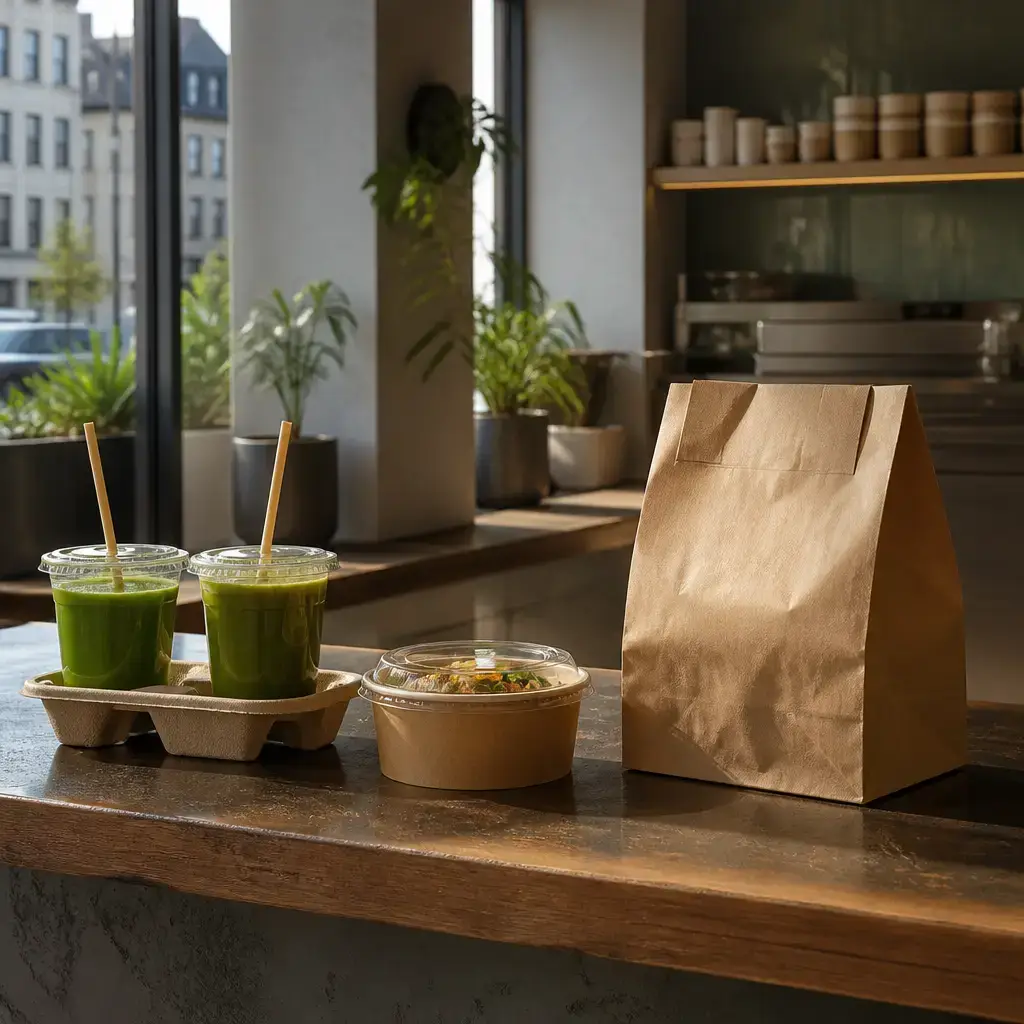
Lad os tjekke bestillingen.
lath AWSS CHEH-guh buh-STEL-ling-un. Let's check the order.Drikkevarerne er her.
DREH-guh-vah-uh-nuh air hair. The drinks are here.Har vi også maden?
HAH KAN vee AW-soh METH-un? Do we have the food too?Den er i denne pose.
Den air ee DEN-uh POH-suh. It's in this bag.Er det hele rigtigt?
Air deh HEE-luh REH-gd? Is everything correct?Det passer med kvitteringen.
Deh PAS-uh mayth kuh-VIT-air-eng-un. It matches the receipt.Jeg kan tage drikkevarerne.
YAI KAN TAY-uh DREH-guh-vah-uh-nuh. I can take the drinks.Jeg bærer madposen.
YAI BAIR-uh METH-poh-sun. I'll carry the food bag.Sentence explanations
Lad os tjekke bestillingen.
Let's check the order.
- Lad os
- let's
- tjekke
- check
- bestillingen
- the order
More detail
“Lad os” is a reusable Danish pattern for suggesting a joint action: Lad os + infinitive means “let’s …”. Lad is the imperative of lade (“to let/allow”), and os is the object form of the first-person plural pronoun (“us”). Together, they express “let us,” rather than describing a command to another person. Example: Lad os gå. — “Let’s go.” “tjekke” is the infinitive “to check.” It follows Lad os in this suggestion pattern. The infinitive ending -e is visible here; it names the action without marking a separate tense. Example: Vi skal tjekke tiden. — “We need to check the time.” “bestillingen” means “the order” here. Its base form is bestilling (“order”), and bestillingen is its definite singular form: the definite ending -en is attached to this common-gender noun. This ending belongs to the noun, not to the verb tjekke. Example: Bestillingen er klar. — “The order is ready.” The utterance combines the joint-action pattern Lad os with the infinitive tjekke and the definite noun bestillingen: “Let’s check the order.” It is a direct, neutral suggestion to carry out that checking together.
Drikkevarerne er her.
The drinks are here.
- Drikkevarerne
- the drinks
- er
- are
- her
- here
More detail
Drikkevarerne means “the drinks” here. The noun is drikkevare (“drink” or “beverage”): drikkevarer is the plural, and drikkevarerne is the definite plural, meaning “the drinks.” The ending -ne marks definiteness in this plural form; the word itself does not identify how many drinks there are. er is the present-tense form of være (“to be”). Danish uses er with subjects of different persons and numbers, so the plural subject here does not require a special plural form of the verb. For example, Maden er her means “The food is here,” while Drikkevarerne er her means “The drinks are here.” her means “here,” referring to the relevant location in the situation. It is an adverb and does not change form for the number or grammatical properties of drikkevarerne. Together, Drikkevarerne er her. has the pattern [definite subject] + [present form of “to be”] + [place adverb]: “The drinks are here.” It states the location of the drinks in the present situation.`
Har vi også maden?
Do we have the food too?
- Har vi
- Do we have
- også
- also; too
- maden
- the food
More detail
Har vi is the question form of “do we have”. Danish places the verb har before the subject vi in this yes/no question. Har is the present form of have; compare jeg har (“I have”) and vi har (“we have”). In a statement, the same elements can appear as Vi har ... (“We have ...”). også means “also” or “too”. It adds this item to something already relevant, without changing the basic question structure. For example, Har I også kaffe? means “Do you also have coffee?” maden means “the food” here. It is built from mad (“food”) plus the definite singular ending -en: mad → maden. Danish commonly marks definiteness by attaching this ending to the noun rather than using a separate word equivalent to “the”. The indefinite form is mad (“food”); a phrase such as noget mad means “some food”. Together, Har vi + også + maden asks whether the group includes the food as well: “Do we have the food too?”
Den er i denne pose.
It's in this bag.
- Den
- it
- er
- is
- i
- in
- denne
- this
- pose
- bag
More detail
Den is the Danish pronoun used here for “it.” It refers grammatically to a singular common-gender noun; the neuter counterpart is det. The fixed sentence does not identify exactly what den refers to, so its grammatical form is the useful point here. Er is the present-tense form of være, “to be.” Er stays the same across persons and numbers in the present: Jeg er her means “I am here,” and Vi er her means “We are here.” I means “in” and introduces the place containing something. Example: Bogen er i tasken. — “The book is in the bag.” Denne means “this” before a singular common-gender noun. It agrees with pose, whose indefinite form is en pose; with a singular neuter noun, Danish uses dette instead. Example: denne stol — “this chair.” Pose means “bag.” Its indefinite form is en pose, and its definite form is posen, “the bag.” Example: Jeg har en pose. — “I have a bag.” Together, Den er means “It is,” i denne pose means “in this bag,” and the whole utterance is: “It’s in this bag.”
Er det hele rigtigt?
Is everything correct?
- Er
- is
- det hele
- everything
- rigtigt
- correct
More detail
Er is the present-tense form of være (“to be”). Danish finite verbs do not change for person or number, so er is used with singular and plural subjects alike. In this question it comes before the subject because Danish commonly places the finite verb before the subject in a yes/no question. Compare the statement pattern Det hele er rigtigt (“Everything is correct”) with the question pattern Er det hele rigtigt?. det hele means “everything” here. det is a neuter singular pronoun, and hele is the definite form of hel (“whole”); together they form a useful expression meaning “the whole thing” or, in this context, “everything.” This expression does not identify a more specific referent by itself. rigtigt means “correct” in this sentence. It is the neuter singular form of the adjective rigtig, agreeing with the neuter singular subject det hele. The common forms are rigtig with common-gender singular nouns, rigtigt with neuter singular nouns, and rigtige in definite or plural contexts. For example, Det er rigtigt means “That is correct.” Together, Er + det hele + rigtigt asks whether everything is correct: “Is everything correct?”
Det passer med kvitteringen.
It matches the receipt.
- Det
- it
- passer med
- matches
- kvitteringen
- the receipt
More detail
Det is the Danish subject pronoun meaning “it” here. It is the neuter singular form, but that form is not chosen merely because the word is the subject: Danish pronoun form also reflects the relevant grammatical gender and number. The fixed sentence does not identify the referent more specifically. Example: Det er klart. — “It is clear.” passer med combines the present-tense form passer of passe with med (“with”). In this sentence, passe med means “match” or “correspond with,” rather than the related sense “fit” in a physical or practical sense. The present form passer presents the matching as a current assessment. Example: Beløbet passer med kvitteringen. — “The amount matches the receipt.” kvitteringen means “the receipt.” Its base form is kvittering; the ending -en marks this noun’s definite singular form. Definiteness identifies a particular receipt in the sentence; it does not itself state a numerical quantity. Example: Jeg har kvitteringen. — “I have the receipt.” Together, Det supplies the subject, passer med says that it corresponds to something, and kvitteringen identifies the comparison point: “It matches the receipt.”
Jeg kan tage drikkevarerne.
I can take the drinks.
- Jeg kan
- I can
- tage
- take
- drikkevarerne
- the drinks
More detail
Jeg kan combines the first-person pronoun jeg (“I”) with kan, the present-tense form of kunne (“can; be able to”). Kan is used with the same form for different subjects; the subject identifies who has the ability or permission. In this sentence, it expresses ability or willingness to take the drinks. Example: Jeg kan hjælpe. — “I can help.” tage is the infinitive of the verb meaning “take”. After the modal verb kan, Danish uses the infinitive without an infinitive marker: kan tage (“can take”). The infinitive is also used after other modal verbs, such as skal tage (“must/will take”). Example: Hun kan tage bogen. — “She can take the book.” drikkevarerne means “the drinks” here. Its base noun is drikkevare (“drink; beverage”): drikkevarer is the indefinite plural, and drikkevarerne is the definite plural. The ending -ne marks that the plural drinks are definite; it does not mark the verb. Example: Jeg køber drikkevarer. — “I am buying drinks.” Jeg køber drikkevarerne. — “I am buying the drinks.” Together, Jeg kan tage drikkevarerne means “I can take the drinks.” The structure is subject + modal verb + infinitive + definite noun phrase: the speaker states that they can take the specifically identified drinks.
Jeg bærer madposen.
I'll carry the food bag.
- Jeg
- I
- bærer
- carry
- madposen
- the food bag
More detail
Jeg means “I.” It is the first-person singular subject pronoun. The same form is used regardless of the speaker’s gender. Example: Jeg kommer. — “I am coming.” bærer is the present-tense form of bære, “to carry.” In this sentence, the present form expresses the intended carrying action, translated here as “I’ll carry.” Danish present tense can refer to a future action when the context makes that timing clear; the form itself is not a special future form. Example: Jeg bærer kassen. — “I’ll carry the box.” madposen means “the food bag.” It is the definite singular form of the compound noun madpose (“food bag”): madpose → madposen. The ending -en marks a common-gender noun as definite singular. Example: Jeg tager madposen. — “I take the food bag.” Together, Jeg bærer madposen. means “I’ll carry the food bag.” The structure is subject + present-tense verb + definite noun: “I” + “carry” + “the food bag.”
Grammar Points
bestillingen, drikkevarerne, maden, kvitteringen, madposen
maden, madposen, kvitteringen
METH-un, METH-poh-sun, kuh-VIT-air-eng-unthe food, the food bag, the receipt
Danish often marks definiteness with a noun suffix: mad becomes maden, pose becomes posen, and kvittering becomes kvitteringen.
rigtig → rigtigt
rigtigt
REH-gdcorrect
The adjective changes to rigtigt in the neuter form, used with neuter expressions such as det hele.
Danish Vocabulary
Lad os tjekke bestillingen.
Den er i denne pose.
Den er i denne pose.
Er det hele rigtigt?
Drikkevarerne er her.
Har vi også maden?
Drikkevarerne er her.
Den er i denne pose.
Har vi også maden?
Har vi også maden?
Den er i denne pose.
Lad os tjekke bestillingen.
Quiz
Word Order
Arrange the words in the correct order.
Let's check the order.
Show Answer
Lad os tjekke bestillingen.The drinks are here.
Show Answer
Drikkevarerne er her.Do we have the food too?
Show Answer
Har vi også maden?Spelling
Tap the letters to spell the word.
too; also
Show Answer
ogsåfood
Show Answer
madencheck
Show Answer
tjekkeorder