10 minutes free every day
Continue audio lessons in the app
Word explanations appear automatically in sync with the audio.
No login required · synced translations · playback with the screen locked
Choose your learning language and open this lesson in the app.

About This Lesson
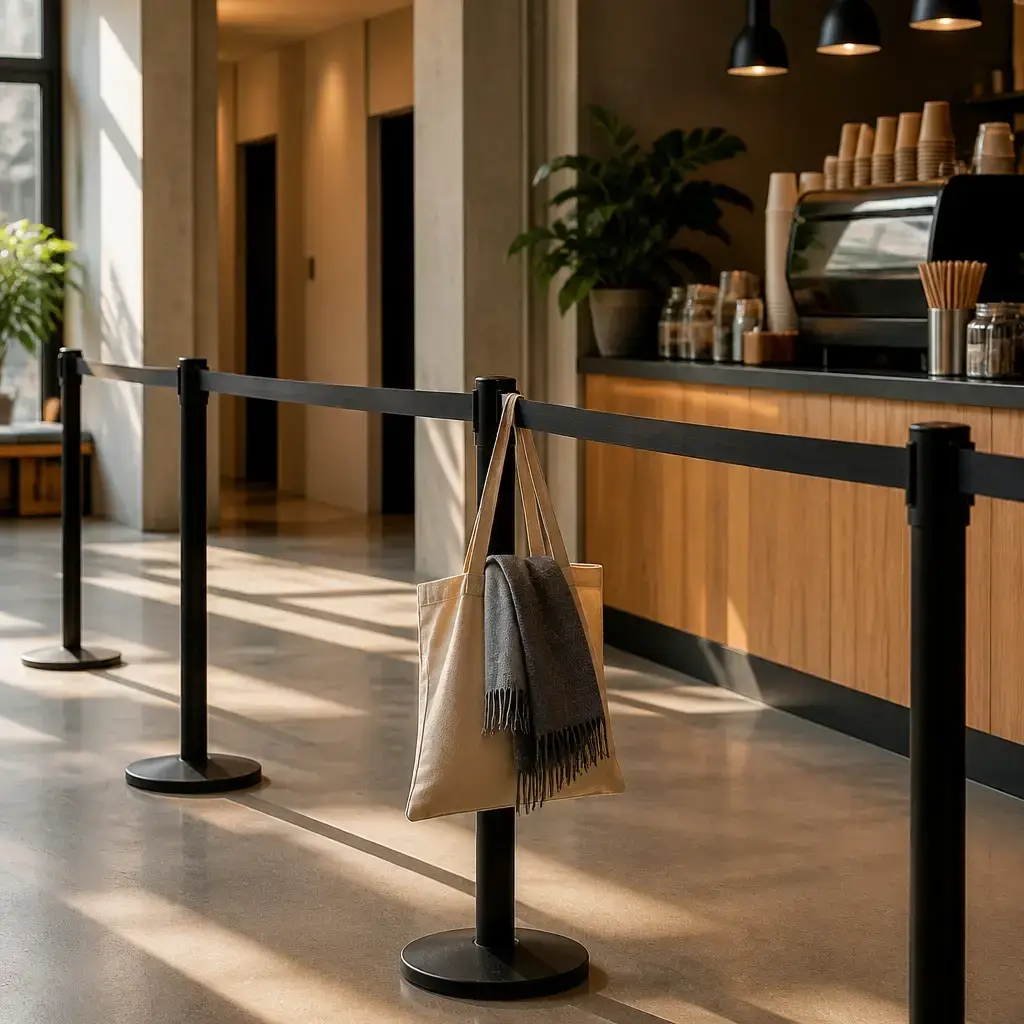
Use Asking someone to keep your place in line to practice Danish conversation, pronunciation, vocabulary, grammar, and quizzes.
Dialogue
Kan du gøre mig en hurtig tjeneste?
kan doo GUR-uh my en HOOR-dee TYEH-nuh-stuh? Could you do me a quick favor?Hvad har du brug for?
veh hah doo broo for? What do you need?Kan du holde min plads, mens jeg går på toilettet?
kan doo HUL-uh meen ples, mens yigh goh poh toh-LET-uh? Can you keep my place while I use the restroom?Det kan jeg, men kom hurtigt tilbage, hvis køen begynder at bevæge sig.
deh kan yigh, men kom HOOR-dee teh-BEH-leh, ves KUR-uhn beh-GURN-uh eh beh-VEH-uh sigh. I can, but please come back quickly if the line starts moving.Jeg er straks tilbage.
yigh air STRAKS teh-BEH-leh. I'll be right back.Hvis køen bevæger sig, går jeg fremad og holder din plads.
ves KUR-uhn beh-VEH-uh sigh, goh yigh FREH-meh oh HUL-uh din ples. If the line moves, I'll move forward and keep your place.Tak. Jeg skynder mig og kommer direkte tilbage.
tak. yigh SGURN-uh my oh KOM-uh dee-REK-tuh teh-BEH-leh. Thanks. I'll hurry and come straight back.Sentence explanations
Kan du gøre mig en hurtig tjeneste?
Could you do me a quick favor?
- Kan du
- Could you
- gøre
- do
- mig
- me
- hurtig
- quick
- tjeneste
- favor
More detail
Kan du is a reusable Danish way to ask whether someone can or could do something. kan is the present-tense form of kunne (“can, be able to”), and du means “you” for one person. In a question, Danish commonly places this modal verb before the subject: Kan du ...? The fixed translation uses the polite English “Could you,” but the Danish form itself is the ordinary present-tense ability/request pattern. gøre means “do” here. It is the infinitive form of gøre, and it follows kan without an infinitive marker: kan gøre = “can/could do.” For example, Kan du hjælpe? means “Can you help?” mig means “me” as an object. Its corresponding subject form is jeg (“I”): Jeg hjælper dig = “I help you,” while Du hjælper mig = “You help me.” In this sentence, mig is the person who receives the favor. hurtig means “quick” and describes tjeneste. In en hurtig tjeneste, the adjective has the common-gender singular indefinite form. With a neuter singular noun, the corresponding form is often hurtigt, as in the example et hurtigt svar = “a quick answer.” tjeneste means “favor” in this expression. It is a common-gender noun, so the phrase uses the indefinite article en: en tjeneste = “a favor.” The same noun can also mean “service” in other contexts, but “favor” is the intended meaning here. Together, Kan du gøre mig en hurtig tjeneste? literally organizes the request as “Can you do me a quick favor?” The modal question Kan du ...? asks whether the listener can perform the action; gøre supplies the action, mig identifies the recipient, and en hurtig tjeneste names what is being done. The complete natural meaning is “Could you do me a quick favor?”
Hvad har du brug for?
What do you need?
- Hvad
- what
- har du … brug for
- do you need
More detail
Hvad means “what” here. It is an interrogative pronoun used to ask about an unspecified thing or need. For example: Hvad læser du? — “What are you reading?” har du contains har, the present-tense form of have, and du, the second-person singular pronoun “you.” Danish uses the same present form har with different subjects: jeg har — “I have,” du har — “you have.” In this question, du comes after har, which is normal Danish word order when a question begins with a question word. brug for is part of the fixed construction have brug for, meaning “need.” Brug is a noun in this expression, and for completes the construction; do not treat brug for as a general replacement for every use of “need.” For example: Jeg har brug for hjælp. — “I need help.” The subject changes in that example, while the present form har and the construction remain the same. Together, Hvad asks which thing is involved, and har du brug for asks whether that thing is needed by “you.” Thus Hvad har du brug for? means “What do you need?”
Kan du holde min plads, mens jeg går på toilettet?
Can you keep my place while I use the restroom?
- Kan du
- can you
- holde
- keep; hold
- min
- my
- plads
- place; spot
- mens
- while
- jeg
- I
- går
- go; walk
- på toilettet
- to the restroom
More detail
Kan du means “can you” here. kan is the present-tense form of kunne (“can, be able to”), and du is the singular informal “you” subject pronoun. Danish places the infinitive after kan: Kan du hjælpe? means “Can you help?” holde is the infinitive of holde, “to hold” or “to keep.” With plads in holde min plads, it means keeping or reserving someone’s place in a queue or line, rather than physically holding an object. After the modal kan, the infinitive appears without an infinitive marker: kan du holde. min means “my” and is the possessive form used with a singular common-gender noun. The noun here is plads, so the form is min; with a neuter singular noun Danish uses mit, and with a plural noun it uses mine. plads means “place” or “spot.” In this context, min plads is “my place” in a queue or line. Example: Hun holder min plads. — “She is keeping my place.” mens introduces a simultaneous subordinate clause and means “while.” It connects the action of keeping the place with an action happening during the same period. jeg is the first-person singular subject pronoun, “I.” It is the subject of the following clause. Danish uses jeg for the speaker whether the speaker is one person of any gender. går is the present-tense form of gå, “to go” or “to walk.” In går på toilettet, the whole expression conventionally means “use the restroom”; the literal movement sense of går is not the intended focus here. Example: Jeg går hjem. — “I am going home.” på toilettet is the restroom expression “to the restroom.” toilettet is the definite singular form of toilet, while på is the preposition used in this expression. The wording can refer to going to use the restroom, not merely moving toward a particular physical object. Together, Kan du holde min plads asks whether the listener can keep the speaker’s place. mens jeg går på toilettet specifies that this should happen while the speaker uses the restroom. The complete meaning is: “Can you keep my place while I use the restroom?”
Det kan jeg, men kom hurtigt tilbage, hvis køen begynder at bevæge sig.
I can, but please come back quickly if the line starts moving.
- Det kan jeg
- I can (do that)
- kom hurtigt tilbage
- come back quickly
- køen
- the line
- begynder at bevæge sig
- starts moving
More detail
Det kan jeg means “I can do that” in this context. det is the pronoun “that/it,” referring to the action requested in the preceding question. kan is the present form of kunne (“can, be able to”); this modal form does not change for person or number. The order is literally “that can I”: placing det first produces the verb-before-subject order typical of a main clause with a fronted element. Compare Jeg kan det (“I can do that”) with Det kan jeg (“I can do that,” with “that” foregrounded). kom hurtigt tilbage is an instruction to return quickly. kom is the imperative of komme (“come”); Danish imperatives generally do not mark the addressee’s person or number. tilbage means “back,” and hurtigt means “quickly” here. The same pattern is reusable with another destination or action, for example Kom tilbage i morgen — “Come back tomorrow.” køen means “the line” or “the queue.” Its base form is kø; the ending -en marks the definite singular form for this noun: en kø (“a line”) → køen (“the line”). The definite form identifies the particular line relevant in the situation; the word itself does not state how many people are in it. begynder at bevæge sig means “starts moving.” begynder is the present form of begynde (“begin, start”). Danish present-tense verbs do not change for person, so the same form can occur with different subjects. After begynde, Danish uses at plus an infinitive: begynder at ... means “starts to ...”. bevæge sig is the reflexive expression “move”; bevæge without sig can instead mean “move something.” Here sig belongs to the expression and does not identify a separate participant. The function words connect the chunks: men means “but,” and hvis introduces a condition, “if.” Thus men kom hurtigt tilbage, hvis køen begynder at bevæge sig says “but come back quickly if the line starts moving.” The complete utterance is therefore: “I can do that, but come back quickly if the line starts moving.”
Jeg er straks tilbage.
I'll be right back.
- Jeg er
- I am
- straks
- right away
- tilbage
- back
More detail
Jeg er means “I am.” Jeg is the first-person singular pronoun “I,” and er is the present-tense form of være (“to be”). In Danish, er is used with different subjects in the present tense; it does not change to mark first person. For example: Hun er her. — “She is here.” straks means “right away” or, in this utterance, “in a very short time.” It is an adverb, so it describes when the return will happen rather than changing form for the speaker or any noun. For example: Jeg kommer straks. — “I’ll come right away.” tilbage means “back,” expressing a return to a previous place or situation. It is an adverb here, not a verb meaning “return.” For example: Han er tilbage. — “He is back.” Together, Jeg er + straks + tilbage gives “I am right away back” in literal structural terms, but the natural English meaning is “I’ll be right back.” Danish uses the present form er in this expression, while the adverb straks supplies the sense that the return will happen very soon. The complete utterance is therefore a concise way to say that the speaker will return shortly.
Hvis køen bevæger sig, går jeg fremad og holder din plads.
If the line moves, I'll move forward and keep your place.
- Hvis
- if
- køen
- the line
- bevæger sig
- moves
- går
- goes; moves
- fremad
- forward
- holder
- keeps; holds
- din
- your
- plads
- place; spot
More detail
Hvis introduces a condition: “if.” It is reusable at the start of a conditional clause: Hvis X, ... = “If X, ...”. Example: Hvis det regner, bliver jeg hjemme. — “If it rains, I stay home.” køen means “the line” here. The base noun is kø, and -en marks the definite singular form: en kø = “a line,” køen = “the line.” Danish definite marking is attached to the noun rather than expressed by a separate word in this form. bevæger sig means “moves.” The base verb is bevæge, used here with the reflexive pronoun sig; bevæger is its present form. In this sentence, the line is the thing that moves, so the expression describes its movement rather than someone moving it. Example: Bilen bevæger sig langsomt. — “The car is moving slowly.” går means “go” or “move” here. Its base form is gå, and går is the present form. In this sentence it is followed by fremad, so the combined meaning is “go forward.” Example: Jeg går hjem. — “I am going home.” fremad is the adverb “forward.” It specifies the direction of the movement; it is not an inflected form of gå. Example: Se fremad. — “Look forward.” holder means “keeps” here, as in keeping something reserved for someone. Its base form is holde, and holder is the present form. The same verb can also mean “holds” in a physical sense, but the surrounding phrase din plads gives it the meaning “keep your place.” Example: Jeg holder en stol til dig. — “I will keep a chair for you.” din means “your” and is a possessive form used with a singular common-gender noun. It agrees with the possessed noun, not with the person who owns it. With a neuter noun, the corresponding form is dit; with plural nouns, it is dine. Here din modifies plads. plads means “place” or “spot.” In this context, it is the position in the line that belongs to the addressee. The definite form is pladsen = “the place/spot.” In din plads, the noun has the bare form commonly used after a possessive determiner; the possessive construction identifies which place is meant even though plads has no definite suffix. Example: Er der en ledig plads? — “Is there an available place?” Together, Hvis køen bevæger sig means “If the line moves.” går jeg fremad means “I go/move forward,” and holder din plads means “keep your place.” The complete utterance is therefore: “If the line moves, I’ll move forward and keep your place.” Danish uses present-tense forms here even though the English translation naturally uses “will” for the future consequence.
Tak. Jeg skynder mig og kommer direkte tilbage.
Thanks. I'll hurry and come straight back.
- Tak
- Thanks
- skynder mig
- hurry
- kommer
- come
- direkte
- straight
- tilbage
- back
More detail
Tak is the Danish word for “thanks” or “thank you.” It is a compact expression of gratitude and can stand alone, as it does here. skynder mig means “hurry.” The verb is skynde sig, a reflexive expression meaning “to hurry.” In this sentence, skynder is the present-tense form, and mig is the reflexive form referring back to the subject Jeg (“I”): Jeg skynder mig = “I hurry / I’ll hurry.” The form skynde is the base form; after jeg, the present form is skynder. Example: Jeg skynder mig. — “I’m hurrying.” kommer is the present-tense form of komme, “to come.” Danish present tense can describe an intended or imminent action in context, so jeg kommer can mean “I come” or “I’ll come,” depending on the situation. Here it continues the speaker’s promise or intention to return. Example: Jeg kommer snart. — “I’ll come soon.” direkte means “directly” or “straight.” It modifies the movement expressed by kommer, indicating that the speaker will come straight rather than taking an indirect route. As an adverb, it does not take the noun-like agreement forms that some Danish adjectives can take. tilbage means “back.” With kommer, the combination kommer ... tilbage means “come back” or “return.” The two words are separate in the sentence, so they form a discontinuous meaning pattern around direkte: kommer direkte tilbage = “come straight back.” The sentence first gives thanks: Tak. Then Jeg skynder mig states that the speaker will hurry. og connects this with kommer direkte tilbage, “and come straight back.” Together, the utterance means: “Thanks. I’ll hurry and come straight back.”
Grammar Points
have brug for + noun
Hvad har du brug for?
veh hah doo broo for?What do you need?
The fixed phrase have brug for means “need.” In the present tense, have becomes har.
skynde sig → skynder mig
Jeg skynder mig straks.
yigh SGURN-uh my STRAKS.I hurry right away.
Reflexive verbs use a pronoun matching the subject: sig changes to mig with jeg.
Danish Vocabulary
- Gender
- common
- Gender
- common
- Gender
- common
- Gender
- neuter
Quiz
Word Order
Arrange the words in the correct order.
What do you need?
Show Answer
Hvad har du brug for?I'll be right back.
Show Answer
Jeg er straks tilbage.Spelling
Tap the letters to spell the word.
restroom; toilet
Show Answer
toilettetdo
Show Answer
gørefavor
Show Answer
tjenestequick