10 minutes free every day
Continue audio lessons in the app
Word explanations appear automatically in sync with the audio.
No login required · synced translations · playback with the screen locked
Choose your learning language and open this lesson in the app.

About This Lesson
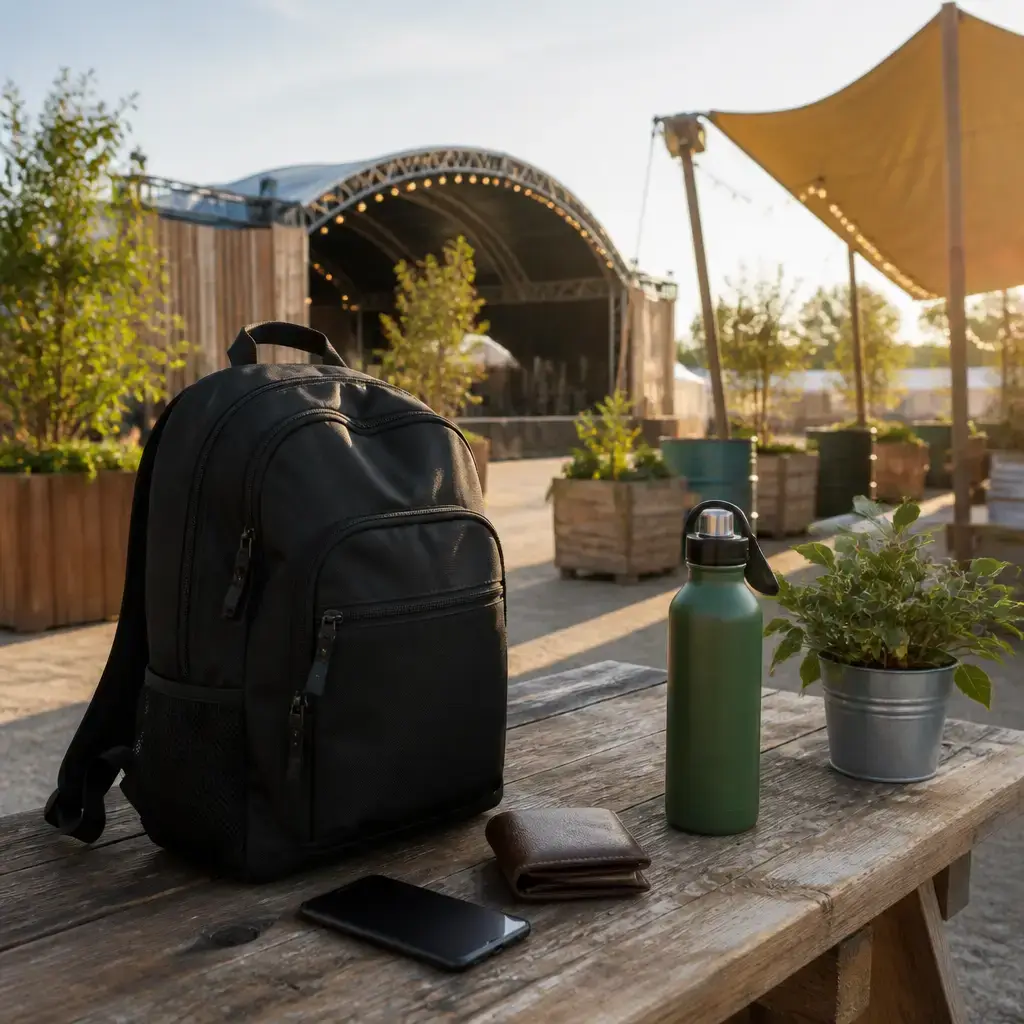
Use Protecting Valuables at a Crowded Festival to practice Danish conversation, pronunciation, vocabulary, grammar, and quizzes.
Dialogue
Denne festival er meget mere overfyldt, end jeg havde forventet.
DEN-uh fes-ti-VAHL air MY-uh MAY-uh OH-vuh-FYOOLT, en yai HAI-uh for-VEN-duh. This festival is much more crowded than I expected.Opbevar dine værdigenstande i en lomme med lynlås, ikke i den udvendige lomme.
ohb-uh-VAIR dee VARE-dee-en-STAN-duh ee en LOM-uh mayd LUN-lohs, IK-uh ee den OOTH-ven-dee-uh LOM-uh. Keep your valuables in a zippered pocket, not in the outside pouch.Jeg flytter min telefon, før musikken distraherer mig.
yai FLYT-uh min te-le-FOHN, fur MOOS-ik-ken dis-tra-HAIR-uh my. I'll move my phone before the music distracts me.Gør det nu. Lommetyve holder ofte øje med folk, der holder op med at være opmærksomme.
gur day noo. LOM-uh-too-vuh HAWL-uh OFF-tuh yai mayd fohlk, dair HAWL-uh AHP mayd at VAIR-uh AHP-MAIRK-som-uh. Do it now. Pickpockets often watch for people who stop paying attention.Skal jeg bære min rygsæk foran mig?
skahl yai BAIR-uh min ROOK-sek foh-RAN my? Should I wear my backpack in front of me?Det ville være sikrere i nærheden af madboderne og indgangene.
day VIL-uh VAIR-uh SEE-gruh-ruh ee NAIR-hay-then ah MAY-boh-thuh-nuh oh en-GONG-uh-nuh. That would be safer near the food stalls and entrance gates.Jeg lægger også min pung i den indvendige lomme.
yai LAY-guh AW-soh min POONG ee den en-VEN-dee-uh LOM-uh. I'll put my wallet in the inside pocket too.Så er den sværere at få fat i.
saw air den SVAIR-uh-ruh at foh FAT ee. That way it is harder to reach.Men du kan stadig nyde festivalen.
men doo kan STAI-thee NOO-thuh fes-ti-VAHL-en. But you can still enjoy the festival.Jeg vil ikke føle mig bekymret, bare være forsigtig.
yai vil IK-uh FUR-luh my beh-KOOM-ruth, BAIR-uh VAIR-uh foh-SDEG-dee. I don't want to feel anxious, just careful.Så lad os være opmærksomme uden at bekymre os hele eftermiddagen.
saw lah oss VAIR-uh AHP-MAIRK-som-uh OO-thun at beh-KOOM-ruh oss HAY-luh EF-tuh-meh-DAI-en. Then let us stay alert without worrying all afternoon.Sentence explanations
Denne festival er meget mere overfyldt, end jeg havde forventet.
This festival is much more crowded than I expected.
- Denne
- this
- festival
- festival
- er
- is
- meget mere
- much more
- overfyldt
- crowded
- end
- than
- jeg
- I
- havde forventet
- had expected
More detail
Denne means “this” here and is the singular common-gender form used before festival. Danish contrasts denne (common-gender singular), dette (neuter singular), and disse (plural). Example: Denne bog er interessant. — “This book is interesting.” festival is a noun meaning “festival.” Its common-gender article is en: en festival. In the fixed sentence, denne identifies the festival being discussed; the word itself does not express a quantity. er is the present-tense form of være, “to be.” It links the subject to the description meget mere overfyldt: festivalen er overfyldt means “the festival is crowded.” meget mere means “much more.” In this comparison, mere is the comparative form of meget in its “much” sense; it means “more.” Here meget intensifies that comparison, so the phrase means “much more,” not simply “more.” The useful pattern is meget mere + adjective, as in Hun er meget mere rolig nu. — “She is much calmer now.” overfyldt means “crowded” or “overcrowded” here. It is the adjective being compared in mere overfyldt, “more crowded.” The comparison is built with mere rather than by changing the spelling of overfyldt. Example: Bussen er overfyldt. — “The bus is overcrowded.” end introduces the second side of a comparison, corresponding to “than”: mere ... end ... means “more ... than ...”. Example: Det er dyrere end før. — “It is more expensive than before.” jeg is the first-person singular pronoun, “I.” Danish uses jeg for the speaker as the subject; its object form is mig, as in Hun ser mig — “She sees me.” havde forventet means “had expected.” havde is the past-tense form of have, used here as an auxiliary, and forventet is the past participle of forvente, “to expect.” Together they form the pluperfect: jeg havde forventet — “I had expected.” The expected thing is understood from the comparison and situation, so Danish does not repeat an object after forventet here. Putting the parts together, Denne festival er identifies the festival and says what it is like; meget mere overfyldt makes a strong comparison; and end jeg havde forventet sets the comparison against the speaker’s earlier expectation. The complete meaning is: “This festival is much more crowded than I expected.”
Opbevar dine værdigenstande i en lomme med lynlås, ikke i den udvendige lomme.
Keep your valuables in a zippered pocket, not in the outside pouch.
- Opbevar
- keep; store
- dine
- your
- værdigenstande
- valuables
- lomme
- lynlås
- zipper
- ikke i
- not in
- lomme
- udvendige
- outside; outer
More detail
Opbevar is the imperative of opbevare, “to keep/store.” It gives a direct instruction to the addressed person; the imperative form does not show whether one or several people are addressed. Compare the reusable pattern Opbevar X i Y — “Keep X in Y.” dine means “your” here and modifies the plural noun værdigenstande. Danish possessives distinguish singular and plural of the possessed noun: din is used with a singular common-gender noun, dit with a singular neuter noun, and dine with a plural noun. The form expresses possession, not a numeric count by itself. værdigenstande is the plural of værdigenstand, meaning a valuable possession or valuable item. The plural ending -e is part of this noun’s inflection. Example: Opbevar dine dokumenter sikkert. — “Store your documents safely.” The first lomme means “pocket.” en lomme is an indefinite singular phrase, while lommen is the definite form, “the pocket.” In en lomme med lynlås, the noun is described by the following med phrase: “a pocket with a zipper.” lynlås is the noun “zipper.” It appears here after med in the compact description med lynlås, “with a zipper.” This is a noun rather than an adjective; the phrase describes what kind of pocket is intended. ikke i means “not in.” ikke negates the location phrase that follows, so it introduces the location to avoid. A reusable contrast is i tasken — “in the bag” versus ikke i tasken — “not in the bag.” The second lomme is again “pocket,” but here it is part of the definite phrase den udvendige lomme, “the outside pocket.” Danish uses den with a singular common-gender noun in this kind of definite noun phrase. udvendige is the definite-form adjective corresponding to udvendig, “outside” or “outer.” The -e ending is used because the adjective stands with a definite noun phrase: den udvendige lomme. This adjective describes the pocket’s position or type; it is not the noun’s base form. Together, Opbevar dine værdigenstande means “Keep your valuables.” i en lomme med lynlås specifies the recommended location, “in a pocket with a zipper,” while ikke i den udvendige lomme contrasts it with the location to avoid, “not in the outside pocket.” The complete instruction is therefore: “Keep your valuables in a zippered pocket, not in the outside pouch.”
Jeg flytter min telefon, før musikken distraherer mig.
I'll move my phone before the music distracts me.
- Jeg
- I
- flytter
- move
- min
- my
- telefon
- phone
- før
- before
- musikken
- the music
- distraherer
- distracts
- mig
- me
More detail
Jeg is the first-person singular subject pronoun, “I.” It is used for the person carrying out the action. The corresponding object form is mig, seen later: Jeg ... mig means “I ... me.” flytter means “move” here. It is the present-tense form of flytte; Danish present forms generally do not change for the subject, so jeg flytter and de flytter use the same verb form. In this sentence, the action is moving an object, namely the phone. Example: Jeg flytter stolen. — “I move the chair.” min means “my” before a singular common-gender noun. It agrees with the possessed noun, not with the possessor: min telefon uses min because telefon is an en-word. With a plural noun, the form is mine, as in mine bøger — “my books.” telefon means “phone.” The form shown is singular and indefinite in the possessive phrase min telefon; the possessive identifies whose phone it is, while the noun itself has no definite ending here. Example: Min telefon ligger her. — “My phone is here.” før means “before” and introduces the event that sets the time limit for the main action. It connects Jeg flytter min telefon with the later clause musikken distraherer mig. musikken means “the music.” Its base form is musik; here, the noun has the singular definite suffix -en, with the stem-final k retained in the spelling: musik + -en → musikken. The suffix belongs to the noun, not to før or distraherer. distraherer means “distracts” here. It is the present-tense form of distrahere. The verb describes the music as causing the speaker to lose focus. Example: Støjen distraherer mig. — “The noise distracts me.” mig means “me,” the first-person singular object pronoun. It is the object affected by distraherer: the music distracts me. This is different from subject jeg; for example, Jeg ser mig means “I see myself,” with jeg acting and mig receiving the action. Together, Jeg flytter min telefon means “I’ll move my phone.” Danish present tense can refer to a planned or imminent action, so the fixed English future “I’ll move” fits this context. før musikken distraherer mig means “before the music distracts me.” The complete utterance therefore means: “I’ll move my phone before the music distracts me.”
Gør det nu. Lommetyve holder ofte øje med folk, der holder op med at være opmærksomme.
Do it now. Pickpockets often watch for people who stop paying attention.
- Gør det
- do it
- nu
- now
- Lommetyve
- pickpockets
- holder … øje med
- watch for
- ofte
- often
- folk
- people
- holder op med at være
- stop being
- opmærksomme
- attentive
More detail
Gør det means “do it” here. Gør is the imperative of gøre (“to do”); the imperative gives a direct instruction. Det is the pronoun “it,” referring to an action understood from the situation rather than identifying that action in this sentence. Compare the reusable pattern Gør X (“Do X”), replacing X with the relevant object or action. nu means “now” and places the instructed action in the present moment. Gør det nu therefore makes the timing explicit: “Do it now.” Lommetyve means “pickpockets.” It is a plural noun: singular lommetyv, plural lommetyve. The plural subject is the group that performs the action in the second sentence. holder øje med is a fixed Danish construction meaning “watch” or “keep an eye on” someone or something. The verb holder is the present-tense form of holde (“to hold”); in this construction, the literal idea of holding an eye produces the idiomatic meaning of monitoring. The preposition med belongs to the construction, so the watched people or things follow med. ofte means “often” and describes repeated frequency. In Lommetyve holder ofte øje med ..., it says that this monitoring happens regularly, not that it happens continuously. folk means “people.” It is a plural noun used for people in general; unlike many Danish plural nouns, it does not take a visible plural ending here. The phrase øje med folk means “watch people” in this sentence. holder op med at være is the construction “stop being.” Holder op comes from holde op (“to stop”), and med at introduces the activity or state that ends. Here, være is the infinitive “to be,” so the pattern is holde op med at + infinitive: “stop [doing something].” For example, Hun holder op med at tale means “She stops talking.” opmærksomme means “attentive” or “paying attention” here. It is the plural form of the adjective opmærksom; the plural ending -e agrees with folk. The wording være opmærksomme means “be attentive,” while holde op med at være opmærksomme means “stop being attentive” or, naturally, “stop paying attention.” Together, Lommetyve holder ofte øje med folk says “Pickpockets often watch people.” The relative clause der holder op med at være opmærksomme identifies the people who stop paying attention: der means “who” here, and the plural adjective opmærksomme matches those people. The complete second sentence is therefore: “Pickpockets often watch for people who stop paying attention.”
Skal jeg bære min rygsæk foran mig?
Should I wear my backpack in front of me?
- Skal jeg
- Should I
- bære
- wear
- min
- my
- rygsæk
- backpack
- foran
- in front of
- mig
- me
More detail
Skal jeg combines the modal verb skal with jeg (“I”). In this question, skal expresses what the speaker should do: “Should I …?” The following verb remains in the infinitive, so the reusable pattern is Skal jeg + infinitive? Example: Skal jeg vente? — “Should I wait?” bære is the infinitive of bære. Its meaning depends on what is being carried or worn; here, with rygsæk and the fixed translation, it means “wear/carry a backpack.” The infinitive is used after skal. Example: Jeg skal bære tasken. — “I have to carry the bag.” min means “my” before a singular common-gender noun. rygsæk is a common-gender noun (en rygsæk), so the matching possessive is min; before a singular neuter noun, Danish uses mit, and before a plural noun, mine. rygsæk means “backpack.” Its base form is singular; the plural is rygsække. The possessive phrase min rygsæk therefore means “my backpack.” foran means “in front of” and expresses position. Here it is followed by mig, forming foran mig, “in front of me.” mig is the object form of the first-person pronoun: jeg is used as the subject, while mig is used after a preposition such as foran. Example: Hun står foran mig. — “She is standing in front of me.” Together, Skal jeg asks for guidance, bære min rygsæk asks about wearing or carrying the speaker’s backpack, and foran mig specifies its position. The complete utterance means: “Should I wear my backpack in front of me?”
Det ville være sikrere i nærheden af madboderne og indgangene.
That would be safer near the food stalls and entrance gates.
- Det
- that
- ville være
- would be
- sikrere
- safer
- i nærheden af
- near
- madboderne
- the food stalls
- indgangene
- the entrance gates
More detail
Det means “that” here and functions as the subject. In this sentence it points to the situation or option being discussed, rather than identifying a particular noun. Danish det is also commonly used for “it” when the referent is neuter or is a situation. ville være combines ville with the infinitive være. Together here they express a hypothetical assessment: “would be.” The infinitive follows ville; it does not take a personal ending. Example: Det ville hjælpe. — “That would help.” sikrere is the comparative form of sikker, “safe” or “secure”: sikker → sikrere (“safer”) → sikrest (“safest”). The comparison is between the option under discussion and another relevant option; the sentence does not state exactly what the other option is. i nærheden af is a reusable prepositional expression meaning “near” or “in the vicinity of.” The noun phrase after af identifies the place relative to which something is near. Example: Hotellet ligger i nærheden af stationen. — “The hotel is near the station.” madboderne means “the food stalls.” It is built from mad (“food”) and boder (“stalls”); the ending -ne marks definite plural, so boder means “stalls,” while boderne means “the stalls.” indgangene means “the entrance gates” here. indgange is the plural of indgang (“entrance”), and -ne marks the definite plural: indgange → indgangene. The translation’s “gates” gives the intended kind of entrance in this context. Together, Det ville være sikrere says “That would be safer.” i nærheden af madboderne og indgangene places the situation near the food stalls and the entrance gates. The complete meaning is: “That would be safer near the food stalls and entrance gates.”
Jeg lægger også min pung i den indvendige lomme.
I'll put my wallet in the inside pocket too.
- Jeg
- I
- lægger
- put
- også
- too
- min
- my
- pung
- wallet
- i
- in
- den
- the
- indvendige
- inside
- lomme
More detail
Jeg is the first-person singular pronoun, “I.” It identifies the speaker as the person carrying out the action. A useful contrast is du (“you,” singular) when addressing the other person. lægger is the present-tense form of lægge, “to put/place” or “to lay.” Here it means “put” in the intended future-oriented translation. Danish present tense can describe a planned or imminent action when the context makes that clear; it does not require a separate future auxiliary. Example: Jeg lægger bogen på bordet. — “I put the book on the table.” også means “also/too,” adding this action to something already mentioned. It can be moved for emphasis in some sentences, but here it follows the verb and contributes the meaning “too.” min is the first-person singular possessive form “my” used with a common-gender singular noun. The noun it specifies here is pung, so min pung means “my wallet.” With a neuter singular noun, Danish uses mit; with a plural noun, it uses mine. pung means “wallet.” It is a common-gender noun: en pung is “a wallet,” and its definite form is pungen, “the wallet.” i is the preposition “in” here. It introduces the place where the wallet will be put. Danish i can also express being inside a place or container in other sentences. den is the definite article “the” for a common-gender singular noun. It agrees with lomme, which is a common-gender noun. In this phrase it is not a standalone pronoun; it forms the definite noun phrase den indvendige lomme, “the inside pocket.” indvendige is the definite-form adjective related to indvendig, meaning “inside” or “interior.” The -e form is used here because the adjective accompanies a definite noun phrase. The adjective describes the pocket as the interior/inside one; it is not the base form of lomme. lomme means “pocket.” It is a common-gender noun: en lomme is “a pocket,” while lommen is “the pocket.” In den indvendige lomme, the adjective and article identify a particular inside pocket without changing the noun’s meaning. Together, Jeg lægger gives “I put/will put,” også adds “too,” and min pung gives “my wallet.” The location phrase i den indvendige lomme means “in the inside pocket.” The complete utterance therefore means: “I’ll put my wallet in the inside pocket too.”
Så er den sværere at få fat i.
That way it is harder to reach.
- Så
- that way
- er
- is
- den
- it
- sværere
- harder
- at få fat i
- to reach
More detail
Så means “that way” here: it points to the manner or situation just mentioned. Danish så can also mean “then” in other contexts, but the fixed translation supports the manner reading here. er is the present-tense form of være, “to be.” The same form is used with singular and plural subjects in the present: jeg er, den er, and de er. den is a third-person singular pronoun for a common-gender referent. It has the role of the subject of er; the supplied sentence and translation do not identify the referent more specifically. Compare the neuter singular form det and the plural form de. sværere means “harder” or “more difficult” here. It is the comparative form of the adjective svær: svær “difficult,” sværere “more difficult,” sværest “most difficult.” The ending belongs to the adjective, not to the pronoun or to any noun. at få fat i is a useful Danish construction meaning “to reach” or “to get hold of.” at introduces the infinitive, while få fat i is the verb expression. For example, Jeg prøver at få fat i hende. means “I am trying to reach her.” Together, Så sets the relevant way or situation, er den sværere says that it is more difficult, and at få fat i states the action that has become more difficult. The whole utterance therefore means: “That way it is harder to reach.”
Men du kan stadig nyde festivalen.
But you can still enjoy the festival.
- Men
- but
- du kan
- you can
- stadig
- still
- nyde
- enjoy
- festivalen
- the festival
More detail
Men means “but” and connects this statement with a contrasting idea. It is a coordinating conjunction; for example, Jeg er træt, men jeg arbejder. means “I am tired, but I am working.” du kan combines du, the second-person singular pronoun “you,” with kan, the present-tense form of kunne, “can” or “be able to.” Kan is a modal verb, so the following verb appears in the infinitive without at: Du kan komme means “You can come.” The form kan is used with different subjects in the present: jeg kan, du kan, and de kan. stadig means “still,” indicating that the possibility or activity continues to hold. In this sentence it modifies the whole modal idea kan nyde: despite the contrast introduced by Men, you remain able to enjoy the festival. nyde is the infinitive “to enjoy.” After the modal kan, Danish uses this bare infinitive, so kan nyde means “can enjoy,” not “can to enjoy.” The present form is also nyder when the verb is used without a modal, as in Jeg nyder musikken. — “I enjoy the music.” festivalen means “the festival.” It is the noun festival with the definite ending -en, which marks a singular definite common-gender noun in this form. The ending expresses “the”; it does not by itself express a numeric quantity. Compare en festival — “a festival” — with festivalen — “the festival.” Together, du kan nyde means “you can enjoy,” and stadig says that this remains possible. The complete utterance, Men du kan stadig nyde festivalen., means “But you can still enjoy the festival.”
Jeg vil ikke føle mig bekymret, bare være forsigtig.
I don't want to feel anxious, just careful.
- Jeg vil
- I want to
- ikke
- not
- føle
- feel
- mig
- me / myself
- bekymret
- anxious / worried
- bare
- just
- være
- be
- forsigtig
- careful / cautious
More detail
Jeg vil: Here vil means “want to,” as supported by the fixed translation and context. Jeg is the first-person singular subject, “I.” The pattern Jeg vil + infinitive can express “I want to …”; depending on context, vil + infinitive can also express future or volition, so the infinitive alone does not determine the meaning. For example, Jeg vil lære dansk. means “I want to learn Danish.” ikke: This is the negation word “not.” In this sentence it negates the wanting expressed by Jeg vil ...: the speaker does not want the described experience. For example, Jeg vil ikke vente. means “I do not want to wait.” føle: This is the infinitive “to feel.” After vil, Danish uses the infinitive without at; the pattern vil føle means “want to feel.” mig: This is the first-person singular object form, “me.” In this sentence it refers back to the subject Jeg, so føle mig means “feel myself.” Danish uses mig rather than the subject form jeg in this object position. For example, Jeg kan se mig. can mean “I can see myself.” bekymret: Here this adjective means “anxious” or “worried.” It describes the state the speaker does not want to feel. The form is related to the verb bekymre, “to worry,” but bekymret is the adjective used here, not the infinitive verb. In føle mig bekymret, the adjective describes the speaker’s state. bare: Here this means “just,” narrowing the second part of the utterance. Its scope becomes clear through the coordination with the following infinitive phrase. For example, Jeg vil bare hvile. means “I just want to rest.” være: This is the infinitive “to be.” It is coordinated with føle under the earlier vil: Jeg vil ikke føle ... , bare være ... means “I do not want to feel ..., just be ...” The subject and vil are understood in the second coordinated part, so they do not need to be repeated. forsigtig: Here this adjective means “careful” or “cautious.” It describes the state the speaker prefers in the second part. The adjective is not a noun and does not mean “care” by itself. For example, Vær forsigtig! means “Be careful!” Together, Jeg vil ikke føle mig bekymret means “I do not want to feel anxious.” bare være forsigtig adds the contrast “just be careful,” with the earlier subject and wanting understood. The complete utterance is therefore: “I don’t want to feel anxious, just careful.”
Så lad os være opmærksomme uden at bekymre os hele eftermiddagen.
Then let us stay alert without worrying all afternoon.
- Så
- Then
- lad os
- let us
- være
- be
- opmærksomme
- alert
- uden at bekymre os
- without worrying
- hele eftermiddagen
- all afternoon
More detail
Så means “then” here and links the utterance to what has just been said. It is also used in other contexts with meanings such as “so,” so its exact English rendering depends on the sentence. lad os is the reusable Danish pattern for a suggestion: “let us” or, naturally, “let’s.” lad is the imperative of lade, while os is the object form used for the first-person plural group. Example: Lad os gå. — “Let’s go.” være is the infinitive “to be.” After lad os, Danish uses the infinitive: lad os være means “let us be” or “let’s stay/be.” opmærksomme means “alert” in this sentence. It is the plural form of the adjective opmærksom, agreeing with the implied first-person plural subject in lad os. The form is not a verb; it describes the group’s state. Example: Vi er opmærksomme. — “We are alert.” uden at bekymre os is a reusable way to express “without worrying.” uden at is followed by an infinitive, here bekymre; os is the reflexive form referring back to the group understood in lad os. The related adjective in the preceding context is bekymret (“worried”), but bekymre in this sentence is the verb “worry.” Example: Hun gik uden at sige noget. — “She left without saying anything.” hele eftermiddagen means “all afternoon.” hele agrees with the singular definite noun eftermiddagen, whose base form is eftermiddag (“afternoon”); the ending in eftermiddagen marks the definite form. Here the phrase gives the time span during which the worrying is absent. Together, Så lad os være opmærksomme means “Then let’s stay alert,” and uden at bekymre os hele eftermiddagen adds “without worrying all afternoon.” The complete utterance is therefore: “Then let us stay alert without worrying all afternoon.”
Grammar Points
bekymre sig + pronomen
Vi vil bekymre os.
vee vil beh-KOOM-ruh oss.We will worry.
Det refleksive pronomen ændres efter personen: sig for han/hun, men os for vi.
holde øje med + substantiv
Holde øje med lommetyve.
HOL-uh YAI mayd LOM-uh-too-vuh.Keep an eye on pickpockets.
Det faste udtryk bruger med før den person eller ting, man holder øje med.
Danish Vocabulary
- Gender
- common
- Gender
- common
- Gender
- common
- Gender
- common
- Gender
- common
Quiz
Word Order
Arrange the words in the correct order.
But you can still enjoy the festival.
Show Answer
Men du kan stadig nyde festivalen.Spelling
Tap the letters to spell the word.
move
Show Answer
flytterovercrowded
Show Answer
overfyldtoutside; external
Show Answer
udvendigekeep; store