10 minutes free every day
Continue audio lessons in the app
Word explanations appear automatically in sync with the audio.
No login required · synced translations · playback with the screen locked
Choose your learning language and open this lesson in the app.

About This Lesson
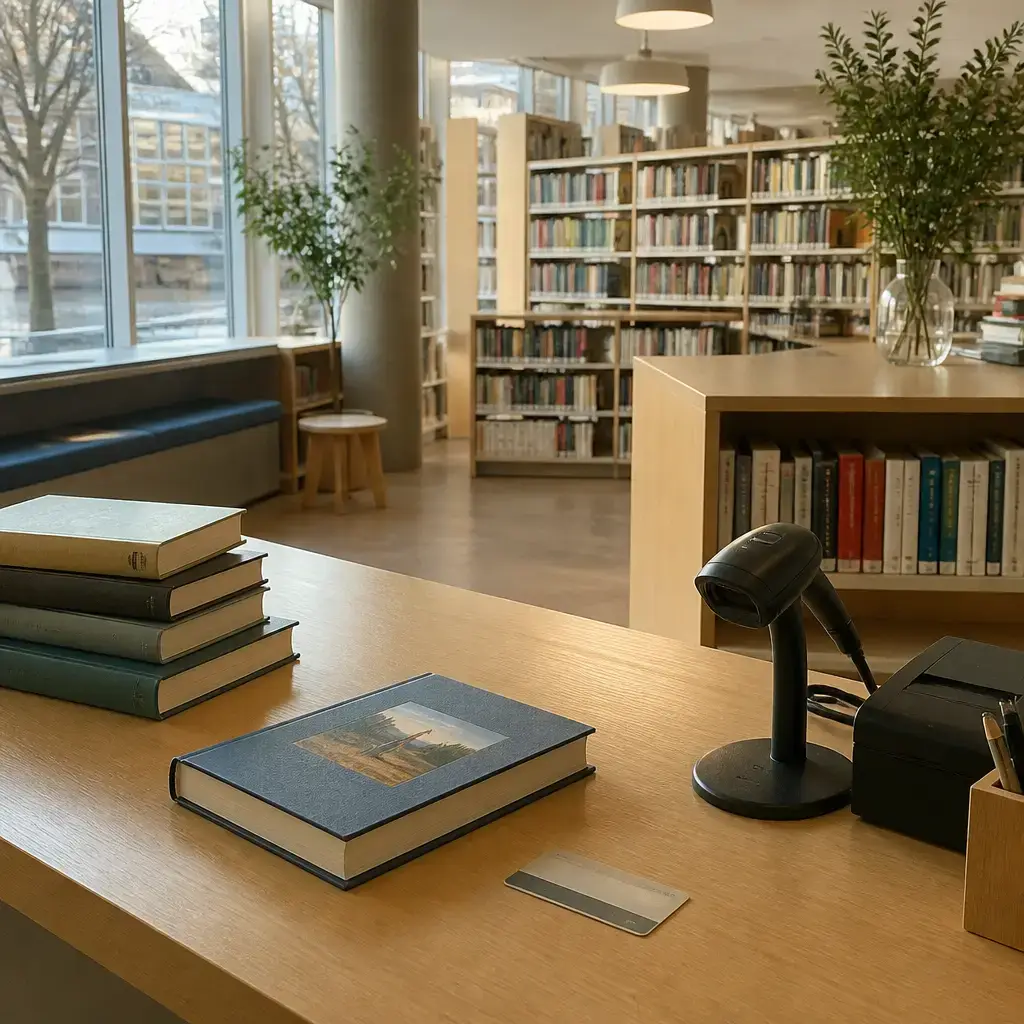
Use Book recommendations at the library to practice German conversation, pronunciation, vocabulary, grammar, and quizzes.
Dialogue
Könnten Sie Sprachlernenden ein Buch empfehlen?
KURN-ten zee SHPRAHK-lair-nen-den ine BOOHKH emp-FAY-len? Could you recommend a book for language learners?Suchen Sie einfache Geschichten oder kurze Artikel?
ZOO-khen zee EYE-fakh-uh guh-SHIKH-ten OH-der KOOR-tsuh ar-TEE-kel? Are you looking for easy stories or short articles?Ich möchte kurze Geschichten mit einfachen Wörtern.
ikh MYURHY-tuh KOOR-tsuh guh-SHIKH-ten mit EYE-nfakh-en VUR-tahn. I want short stories with simple words.Dieses Buch hat leicht verständliche Geschichten und hilfreiche Bilder.
DEE-zes BOOHKH haht LYKHt fer-SHTEND-likh-uh guh-SHIKH-ten oont HILF-rye-huh BIL-der. This book has easy-to-understand stories and helpful pictures.Kann ich es heute mit nach Hause nehmen?
KAHN ikh es HOY-tuh mit nahkh HOW-zuh NAY-men? Can I take it home today?Bitte zeigen Sie Ihre Bibliothekskarte am Schalter.
BIT-tuh TSY-gen zee EE-ruh bee-blee-oh-TAKE-skahr-tuh ahm SHAHL-ter. Please show your library card at the desk.Ich leihe es jetzt aus.
ikh LYE-uh es yetst ows. I will check it out now.Kommen Sie wieder, wenn Sie das Buch gelesen haben, um eine weitere Empfehlung zu bekommen.
KOM-men zee VEE-der, ven zee dahs BOOHKH guh-LAY-zen HAH-ben, oom EYE-nuh VY-ter-uh emp-FAY-loong tsoo beh-KOM-men. Come back for another recommendation after you finish it.Sentence explanations
Könnten Sie Sprachlernenden ein Buch empfehlen?
Could you recommend a book for language learners?
- Könnten Sie
- could you
- Sprachlernenden
- language learners
- Buch
- book
- empfehlen
- recommend
More detail
Könnten Sie is a polite formal request. könnten is the Konjunktiv II form of können (“can”): können → könnten. The form expresses a tentative “could,” rather than stating simple present ability. Sie is the formal second-person pronoun and is capitalized. Example: Könnten Sie das wiederholen? — “Could you repeat that?” Sprachlernenden means “language learners” here. It is the dative plural form of the nominalized adjective/participle Sprachlernende (“language learner”): Sprachlernende (plural nominative/accusative) → Sprachlernenden (plural dative). The dative marks the people for whom the recommendation is intended. Example: Ich gebe Sprachlernenden Tipps. — “I give language learners tips.” Buch is the noun “book.” In the full phrase ein Buch, it is singular and accusative, the thing being recommended. The indefinite article ein marks an unspecified singular book; it does not by itself assert a numerical count. Example: Ich lese ein Buch. — “I am reading a book.” empfehlen means “to recommend.” This is the infinitive, and its useful forms include empfehlen (present infinitive), empfahl (simple past), and empfohlen (past participle). empfehlen commonly takes a person or intended recipient in the dative and the recommended thing in the accusative: Ich empfehle ihr das Buch. — “I recommend the book to her.” In this question, Könnten Sie places the polite modal request first, while empfehlen remains at the end as the infinitive. The structure is Könnten Sie + dative recipient Sprachlernenden + accusative item ein Buch + empfehlen: “Could you recommend a book for language learners?”
Suchen Sie einfache Geschichten oder kurze Artikel?
Are you looking for easy stories or short articles?
- Suchen
- look for; search
- einfache
- easy; simple
- Geschichten
- stories
- kurze
- short
- Artikel
- articles
More detail
Suchen is the present-tense form of suchen (“to look for; to search”) used with formal Sie here. In a yes/no question, the finite verb comes first: Suchen Sie ...? means “Are you looking for ...?” The formal Sie uses the same verb form as third-person plural, sie suchen, but it is capitalized. suchen normally takes the thing being sought as its object: Ich suche ein Buch. — “I am looking for a book.” einfache comes from the adjective einfach (“easy; simple”). It describes Geschichten here, and its ending is the form used before a plural noun without an article: einfache Geschichten. The meaning here is that the stories are easy or simple, not that they are merely short. Compare eine einfache Geschichte — “an easy story.” Geschichten is the plural of the noun Geschichte (“story”). The plural form changes the stem vowel and adds -n: die Geschichte → die Geschichten. In this sentence it is one of the two things being looked for. Example: Ich lese Geschichten. — “I read stories.” kurze comes from kurz (“short”) and describes Artikel. Its ending matches the plural noun phrase without an article: kurze Artikel. The adjective refers to length here. Example: Das sind kurze Texte. — “Those are short texts.” Artikel means “articles” here, as in written texts. Its singular and plural forms are identical: der Artikel → die Artikel; the surrounding grammar and meaning identify the form as plural in this utterance. Example: Ich lese einen Artikel. — “I am reading an article.” Together, Suchen Sie asks formally whether the listener is looking for something. The two coordinated objects are einfache Geschichten and kurze Artikel; oder (“or”) presents them as alternatives. Thus Suchen Sie einfache Geschichten oder kurze Artikel? means “Are you looking for easy stories or short articles?”
Ich möchte kurze Geschichten mit einfachen Wörtern.
I want short stories with simple words.
- Ich möchte
- I want
- kurze
- short
- Geschichten
- stories
- einfachen
- simple
- Wörtern
- words
More detail
Ich möchte is a reusable way to express a wish or request. möchte is the first-person singular present form used here with the meaning “want” or “would like”; it is the finite verb for ich. Compared with Ich will, Ich möchte is generally gentler. Example: Ich möchte Tee. — “I would like tea.” kurze comes from the adjective kurz, “short”. Here it describes the plural noun Geschichten, so its meaning is “short”. Useful forms are kurz (short), kürzer (shorter), and am kürzesten (shortest). In this noun phrase, the ending -e marks the adjective form used with a plural noun without an article in the accusative: kurze Geschichten. Geschichten is the plural of die Geschichte, “story”. The sentence therefore asks for more than one story. The noun is the accusative object of möchte: Ich möchte [kurze Geschichten] — “I want short stories.” einfachen comes from einfach, “simple” or “easy”. Here it describes Wörtern and means “simple”. Its -en ending is used because mit requires the dative and the noun is plural: mit einfachen Wörtern. Example: mit einfachen Sätzen — “with simple sentences.” Wörtern is the dative plural of das Wort, “word”. The plural is Wörter; after mit, the dative plural adds -n, giving Wörtern. Thus mit einfachen Wörtern means “with simple words”. Together, Ich möchte expresses the speaker’s wish, kurze Geschichten is what the speaker wants, and mit einfachen Wörtern describes those stories as being written with simple words. The complete meaning is: “I want short stories with simple words.”
Dieses Buch hat leicht verständliche Geschichten und hilfreiche Bilder.
This book has easy-to-understand stories and helpful pictures.
- Dieses
- this
- Buch
- book
- hat
- has
- leicht verständliche
- easy-to-understand
- Geschichten
- stories
- hilfreiche
- helpful
- Bilder
- pictures
More detail
Dieses means “this” here and points to one specific thing. It is the neuter singular form of dieser; the form agrees with Buch, not with the speaker. Compare dieser for masculine singular, diese for feminine singular and plural, and dieses for neuter singular. Example: Dieses Bild ist hilfreich. — “This picture is helpful.” Buch means “book.” Its base form is the neuter noun das Buch; its plural is die Bücher. The plural changes the vowel and adds -er, so it is not formed by simply adding -s. hat is the third-person singular present form of haben (“to have”). Here it states that the book contains or possesses the following items. The present-tense forms include ich habe, du hast, and er/sie/es hat. Example: Das Buch hat Bilder. — “The book has pictures.” leicht verständliche describes the stories as easy to understand. Verständliche is the adjective verständlich (“understandable”); leicht is an adverb modifying that adjective, so the combined meaning is “easy to understand,” not a comparative form of leicht. Before the plural noun Geschichten, the adjective has the ending -e: leicht verständliche Geschichten. Example: Das ist ein leicht verständlicher Text. — “That is an easy-to-understand text.” Geschichten means “stories.” It is the plural of the feminine noun die Geschichte (“story”). In this sentence it is one of the things that the book has, so it functions as an accusative object; the plural form itself does not show a separate accusative ending. Example: Ich lese Geschichten. — “I read stories.” hilfreiche means “helpful.” It is the adjective hilfreich, with the plural ending -e before Bilder: hilfreiche Bilder. This describes the pictures as useful or helpful. Example: Das sind hilfreiche Beispiele. — “These are helpful examples.” Bilder means “pictures.” It is the plural of the neuter noun das Bild; unlike Buch, its plural is formed with -er without a vowel change: Bild → Bilder. Like Geschichten, it is another accusative object of hat. The sentence begins with the demonstrative noun phrase Dieses Buch (“This book”). The verb hat then introduces two coordinated objects: leicht verständliche Geschichten and hilfreiche Bilder. Together, they mean: “This book has easy-to-understand stories and helpful pictures.”
Kann ich es heute mit nach Hause nehmen?
Can I take it home today?
- Kann ich
- Can I …?
- es
- it
- heute
- today
- mit nach Hause
- home with me
- nehmen
- take
More detail
Kann ich contains the present-tense form kann of können (“can, be able to”) plus ich (“I”). In this question, kann expresses a request for permission, matching “Can I …?” The verb comes before the subject in this yes/no question: Kann ich ...? Compare the reusable pattern Kann ich ...? with an infinitive at the end. es is an accusative pronoun meaning “it” here. Its specific grammatical form is neuter singular, but the fixed translation identifies the intended referent only as “it”; the pronoun itself does not name that referent. Example: Ich nehme es. — “I’ll take it.” heute is the time adverb “today.” It places the taking on the current day. Example: Ich komme heute. — “I’m coming today.” mit nach Hause is a useful directional construction meaning “home with me” in this sentence. nach Hause is the fixed expression for movement toward home, while mit adds the idea of taking something along. It is not the same as zu Hause, which means being at home rather than moving homeward. Example: Ich nehme den Schirm mit nach Hause. — “I’m taking the umbrella home with me.” nehmen is the infinitive “to take.” Here it follows the modal verb kann; with a modal verb, the other verb remains in the infinitive and goes to the end of the clause. Together with separated mit, it forms the reusable pattern etwas mitnehmen (“to take something along”): Ich nehme das Buch mit. — “I’m taking the book with me.” The utterance assembles as Kann ich + es + heute + mit nach Hause + nehmen: “Can I take it home today?” It is a polite, direct request for permission to take the object home today.
Bitte zeigen Sie Ihre Bibliothekskarte am Schalter.
Please show your library card at the desk.
- Bitte
- please
- zeigen
- show
- Sie
- you
- Ihre
- your
- Bibliothekskarte
- library card
- Schalter
- desk
More detail
Bitte makes the request polite: “please.” It can also be used at the beginning or end of many requests. Example: Bitte warten Sie. — “Please wait.” zeigen means “to show.” In this sentence it is the infinitive used in the polite imperative pattern zeigen Sie ...: “show ...” The verb comes before Sie in this request. Example: Zeigen Sie den Ausweis. — “Show the ID.” Sie is the formal second-person pronoun “you.” In this polite imperative, it refers to the person being addressed and is written with a capital letter. The same form is also used for formal “you” in other grammatical roles, so its exact role comes from the sentence. Ihre means “your” here. It is the possessive form agreeing with the feminine singular noun Bibliothekskarte in the accusative role after zeigen: the thing being shown. Possessives change according to the noun phrase’s grammatical features; Ihre is not the noun’s base form and does not mean “you.” Bibliothekskarte means “library card.” It is a German compound noun, formed from Bibliothek (“library”) and Karte (“card”); the whole compound is a single noun, and its grammatical gender is feminine: die Bibliothekskarte. Example: Ich habe eine Bibliothekskarte. — “I have a library card.” Schalter means “desk” in this context, specifically a service or counter where someone is assisted. Its gender is masculine: der Schalter. In am Schalter, the preposition an is combined with the masculine/neuter dative article dem: an dem → am. Here the phrase indicates the location “at the desk.” Example: Wir treffen uns am Schalter. — “We will meet at the desk.” Together, Bitte zeigen Sie forms the polite request “Please show.” Ihre Bibliothekskarte is the object being shown, and am Schalter gives the location where the request applies. The complete utterance is therefore: “Please show your library card at the desk.”
Ich leihe es jetzt aus.
I will check it out now.
- Ich
- I
- leihe … aus
- check out; borrow
- es
- it
- jetzt
- now
More detail
Ich means “I” and identifies the speaker as the actor. German subject pronouns include ich (“I”), du (“you,” singular informal), and Sie (“you,” formal); the form of the verb must match the subject. leihe ... aus is the separated form of the verb ausleihen, meaning “to borrow” or, from the lending side, “to lend out.” Here the library context and the fixed translation establish the borrowing sense: the speaker is checking an item out. In a main clause, the verb is split: the conjugated part appears in the clause position and aus moves to the end. The first-person singular present form is ich leihe; the infinitive is ausleihen. For example: Ich leihe ein Buch aus. — “I borrow a book.” es is the neuter singular pronoun “it.” Here it refers to the item being checked out, with its specific noun not stated in this sentence. Its form is determined by its grammatical role and referent; es is also used as the subject form for a neuter singular noun, so the exact role must come from the sentence. jetzt means “now” and places the action at the present time. It can be reused with many verbs: Ich komme jetzt. — “I’m coming now.” Together, Ich supplies the subject, leihe ... aus expresses the separable verb “borrow/check out,” es is the item borrowed, and jetzt marks the time. The whole utterance means: “I will check it out now.” In German, the present tense can describe an action happening now or an immediate intended action; here the library context supports the latter translation.
Kommen Sie wieder, wenn Sie das Buch gelesen haben, um eine weitere Empfehlung zu bekommen.
Come back for another recommendation after you finish it.
- Kommen Sie
- come
- wieder
- back; again
- wenn
- when
- Buch
- book
- gelesen haben
- have read
- um … zu bekommen
- in order to get
- weitere
- another; additional
- Empfehlung
- recommendation
More detail
Kommen Sie is the formal imperative of kommen (“to come”). Sie is the formal “you” and is capitalized. The reusable pattern Kommen Sie ... means “Come ...” when addressing someone formally. Example: Kommen Sie morgen. — “Come tomorrow.” wieder means “again” or, here, “back,” indicating a return. Kommen Sie wieder therefore means “Come back.” wenn introduces a condition or a time situation. Here it is temporal: “when.” In a German subordinate clause introduced by wenn, the finite verb comes at the end. Buch is the noun “book.” Its dictionary form is das Buch; das marks neuter singular here. In das Buch gelesen, Buch is the accusative object of gelesen (“read”). The English translation’s it corresponds to this book. gelesen haben means “have read” here. gelesen is the past participle of lesen (“to read”), and haben is the auxiliary. Together they form the perfect: Sie haben das Buch gelesen — “You have read the book.” In the wenn clause, the auxiliary is placed at the end: wenn Sie das Buch gelesen haben — “when you have read the book,” rendered in the fixed translation as “after you finish it.” um ... zu bekommen expresses purpose: “in order to get.” bekommen is the infinitive meaning “to get” or “to receive.” A reusable pattern is um ... zu + infinitive: Ich komme, um Hilfe zu bekommen. — “I am coming to get help.” weitere means “another” or “additional” here and modifies Empfehlung. It is an inflected form of the adjective weiter, which can mean “further”; in eine weitere Empfehlung, the ending -e is the form used with a feminine singular accusative noun phrase after the indefinite article eine. Empfehlung means “recommendation.” The noun’s base form is Empfehlung, and its dictionary form is die Empfehlung, a feminine noun. Here it occurs in eine weitere Empfehlung, “another recommendation.” The noun is related to the verb empfehlen (“to recommend”), while the noun itself names the recommendation. As a whole, Kommen Sie wieder gives the request “Come back.” The wenn clause sets the time: wenn Sie das Buch gelesen haben, “when you have read the book,” expressed in the fixed translation as “after you finish it.” The final um eine weitere Empfehlung zu bekommen gives the purpose, “in order to get another recommendation.” Thus the complete utterance means: “Come back for another recommendation after you finish it.”
Grammar Points
wenn + Nebensatz mit Verb am Ende
Kommen Sie wieder, wenn Sie gelesen haben.
KOM-men zee VEE-der, ven zee guh-LAY-zen HAH-ben.Come back when you have finished reading.
In a wenn-clause, the verb comes at the end: gelesen haben.
möchte + Infinitiv am Satzende
Sie möchte hilfreiche Bilder mit nach Hause nehmen.
zee MYURHY-tuh HILF-rye-huh BIL-der mit nahkh HOW-zuh NAY-men.You would like to take helpful pictures home.
After möchte, the second verb stays in the infinitive at the end: nehmen.
German Vocabulary
Quiz
Word Order
Arrange the words in the correct order.
Could you recommend a book for language learners?
Show Answer
Könnten Sie Sprachlernenden ein Buch empfehlen?I will check it out now.
Show Answer
Ich leihe es jetzt aus.Spelling
Tap the letters to spell the word.
book
Show Answer
Buchor
Show Answer
odershort
Show Answer
kurzeare looking for