10 minutes free every day
Continue audio lessons in the app
Word explanations appear automatically in sync with the audio.
No login required · synced translations · playback with the screen locked
Choose your learning language and open this lesson in the app.

About This Lesson
Use Getting a Washing Machine to Start to practice German conversation, pronunciation, vocabulary, grammar, and quizzes.
Dialogue
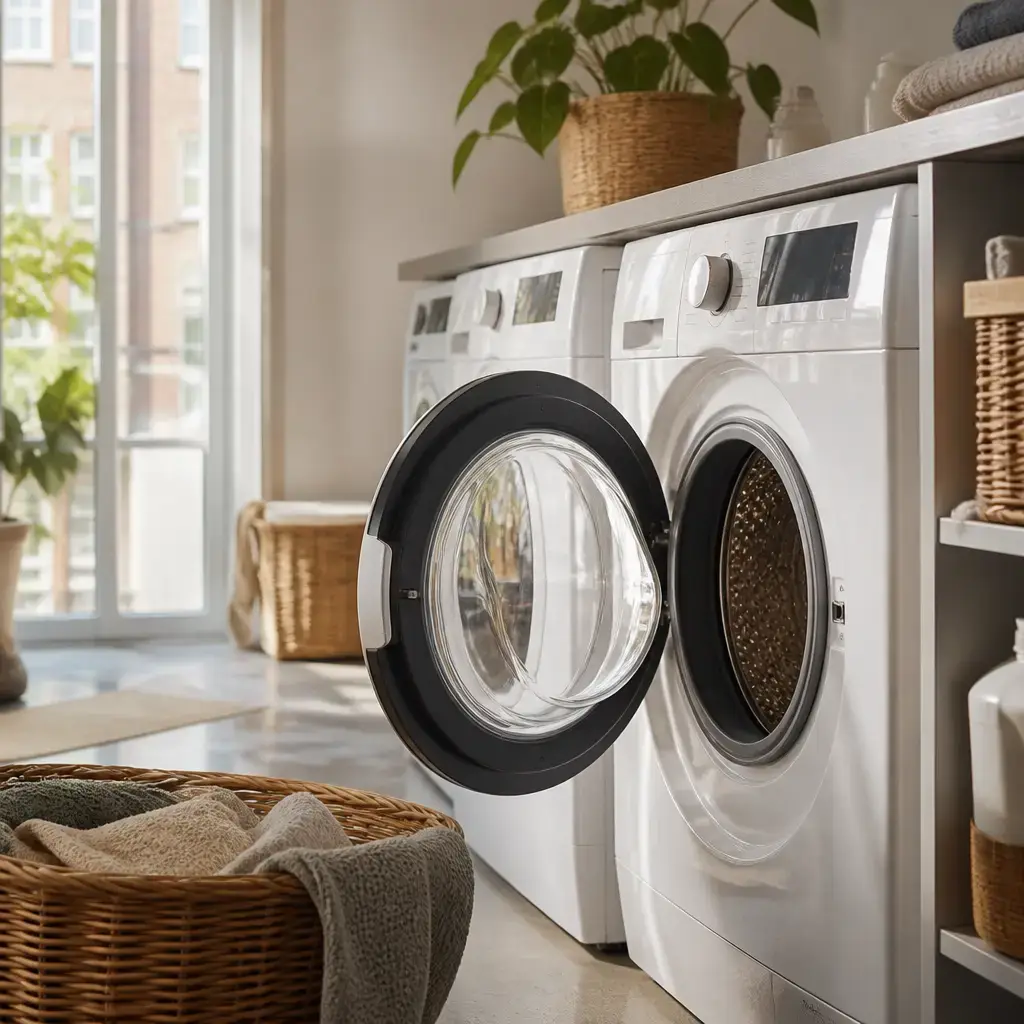
Diese Waschmaschine startet nicht.
DEE-zuh VAHSH-muh-SHEE-nuh SHTAR-tet nikht. This washing machine won't start.Hast du den Stecker und den Einschaltknopf geprüft?
HAST doo dayn SHTEK-er oont dayn EYN-shalt-knopf geh-PROOFT? Did you check the plug and the power button?Der Stecker steckt, aber nichts passiert.
dayr SHTEK-er shtaykt, AH-ber nikhts pah-SEERT. The plug is in, but nothing happens.Vielleicht ist die Tür nicht richtig zu.
fye-LIKHT ist dee TOOR nikht RIKH-tikh tsoo. Maybe the door isn't closed properly.In der Anleitung steht, dass die Tür klicken soll, bevor die Maschine startet.
in dair AHN-lie-toong shtayt, dahs dee TOOR KLIK-en zohl, beh-FOR dee muh-SHEE-nuh SHTAR-tet. The instructions say it should click before it starts.Drück die Tür noch einmal, dann drück auf Start.
DRIK dee TOOR nokh EYN-mahl, dahn DRIK owf SHTART. Push the door once more, then press start.Die Tür hat geklickt, und jetzt funktioniert die Maschine.
dee TOOR hat geh-KLIKT, oont yetst foonk-tsee-oh-NEERT dee muh-SHEE-nuh. The door clicked, and now it works.Manchmal lösen einfache Kontrollen das Problem.
MAHNKH-mahl LUHR-zən EYN-fahkh-uh kon-TROHL-en dahs proh-BLAYM. Sometimes simple checks solve the problem.Sentence explanations
Diese Waschmaschine startet nicht.
This washing machine won't start.
- Diese
- this
- Waschmaschine
- washing machine
- startet
- starts
- nicht
- not
More detail
Diese means “this” here and is the feminine singular nominative form used with the subject Waschmaschine. The form changes with grammatical gender, number, and case: for example, dieser Knopf is “this button,” while diese Maschine is “this machine.” Waschmaschine is the noun for “washing machine.” It is a compound noun made from Wasch- (“washing”) and Maschine (“machine”); German nouns are capitalized. In this sentence it is the subject, so the sentence is about this particular appliance. startet is the third-person singular present form of starten, “to start.” The base-form pattern is ich starte, du startest, er/sie/es startet. German present tense can describe a current failure or a failure that is expected now, so startet nicht naturally corresponds to “won’t start” in this translation. nicht means “not.” Here it negates the starting action: startet nicht means “does not start” or “won’t start.” Its position after startet makes the negative meaning apply to the verb phrase. Together, Diese Waschmaschine startet nicht. has the structure “This washing machine does not start.” The demonstrative identifies the appliance, Waschmaschine is the subject, startet states the action, and nicht negates that action.
Hast du den Stecker und den Einschaltknopf geprüft?
Did you check the plug and the power button?
- Hast du
- did you
- Stecker
- plug
- Einschaltknopf
- power button
- geprüft
- checked
More detail
Hast du is the present-tense form of haben for du (“you”). In a yes/no question, the conjugated verb comes first: Hast du ...? This combines with a past participle at the end to form the German perfect: Hast du geprüft? = “Did you check?” Stecker means “plug.” Its base form is der Stecker; here it appears as den Stecker because it is the direct object of prüfen, which takes the accusative. The masculine singular article changes from der to den in this role. Example: Ich prüfe den Stecker. — “I check the plug.” Einschaltknopf means “power button” or “on button.” It is a compound: einschalten means “to switch on,” and Knopf means “button,” but the complete noun is used as one word. Its base article is der Einschaltknopf; here den Einschaltknopf marks it as a masculine singular accusative object. The two objects are joined by und: den Stecker und den Einschaltknopf. geprüft is the past participle of prüfen (“to check, inspect”). The form is regular: prüfen → geprüft. With haben, it appears at the end of this question. The question structure is therefore Hast du + object(s) + geprüft. Together, Hast du den Stecker und den Einschaltknopf geprüft? means “Did you check the plug and the power button?” It asks whether the addressee carried out that checking in the past. In the appliance context, the two listed items are the plug and the power button of the washing machine.
Der Stecker steckt, aber nichts passiert.
The plug is in, but nothing happens.
- Der Stecker
- the plug
- steckt
- is in; is plugged in
- nichts
- nothing
- passiert
- happens
More detail
Der Stecker means “the plug” here. Stecker is a masculine noun; in this sentence, der marks the nominative subject. The form is singular. The same noun appears in the preceding question as den Stecker, where den marks it as the object of geprüft. steckt comes from stecken. In this sentence it is the present-tense, third-person singular form: Der Stecker steckt = “the plug is in” or “the plug is plugged in.” Here stecken describes the plug’s inserted position, not an action someone is currently performing. Example: Der Schlüssel steckt im Schloss. — “The key is in the lock.” nichts is the pronoun “nothing.” It makes the second clause negative by referring to no thing or no event. Example: Nichts funktioniert. — “Nothing works.” passiert comes from passieren, “to happen.” It is the present-tense, third-person singular form. In nichts passiert, the grammatical subject is nichts, and the meaning is “nothing happens.” Example: Was passiert? — “What is happening?” aber connects the two clauses with “but.” The first clause says that the plug is in; the second contrasts this with the fact that nothing happens. The complete structure is Der Stecker steckt, aber nichts passiert. — “The plug is in, but nothing happens.”
Vielleicht ist die Tür nicht richtig zu.
Maybe the door isn't closed properly.
- Vielleicht
- maybe
- ist
- is
- die Tür
- the door
- nicht
- not
- richtig
- properly; correctly
- zu
- closed
More detail
Vielleicht comes first and marks the whole statement as uncertain: “maybe.” It does not assert that the door is definitely closed or definitely not closed. Example: Vielleicht ist die Tür offen. — “Maybe the door is open.” ist is the third-person singular present form of sein (“to be”). Its subject here is singular die Tür, so German uses ist; with a plural subject, the present form is sind, as in Die Türen sind zu. — “The doors are closed.” die Tür means “the door.” Tür is a feminine singular noun, and die is its definite article in this form. The article is part of the noun phrase; the source specifically identifies a door, but does not identify any further type of door. nicht is the standard negation word. Here it negates the following description richtig zu, producing “not properly closed,” rather than simply changing the noun phrase die Tür. richtig means “properly” or “correctly” in this sentence. It evaluates the state of the door: the door may be shut, but not in the correct or complete way. In other contexts, the same word can mean “right” or “correct,” for example Das ist richtig. — “That is correct.” zu is an adjective-like state word here, meaning “closed” when used with a door or similar opening. It is not the preposition zu in this sentence. A reusable pattern is Die Tür ist zu. — “The door is closed.” The more formal or literal adjective geschlossen can also describe a closed door: Die Tür ist geschlossen. — “The door is closed.” Together, die Tür ist zu says that the door is in a closed state. Adding richtig makes the standard or complete quality of that state relevant, and nicht denies that quality: Die Tür ist nicht richtig zu. means “The door isn’t closed properly.” Finally, Vielleicht places the entire proposition under uncertainty, giving the complete meaning “Maybe the door isn’t closed properly.”
In der Anleitung steht, dass die Tür klicken soll, bevor die Maschine startet.
The instructions say it should click before it starts.
- Anleitung
- instructions; manual
- steht
- says; is stated
- Tür
- door
- klicken
- click
- soll
- is supposed to; should
- bevor
- before
- Maschine
- machine
- startet
- starts
More detail
Anleitung is a feminine singular noun meaning “instructions,” “directions,” or “manual.” In English, “instructions” is often plural, but the German noun here is singular: die Anleitung. Example: Lies die Anleitung. — “Read the instructions/manual.” steht is the third-person singular present form of stehen, “to stand.” With written information, German uses stehen to mean that something is written or stated: In der E-Mail steht ... — “The email says/is written ...” Here, In der Anleitung means “in the instructions/manual”; in takes the dative for a fixed location, giving der with feminine die Anleitung. Tür means “door.” Its base form is die Tür; the noun itself is unchanged here. In die Tür, die is the feminine singular nominative article marking the subject of klicken. Example: Die Tür ist offen. — “The door is open.” klicken means “to click” or “to make a clicking sound.” It is the infinitive form. After soll, the infinitive remains at the end of its clause: Die Tür soll klicken. — “The door is supposed to click.” Here, the door is the thing expected to make the click; the wording does not say that someone clicks the door. soll is the third-person singular present form of sollen, “to be supposed to” or “should.” The subject is die Tür, so singular soll is used. In this construction, soll expresses an expected or specified result, and klicken names the expected action. Example: Die Tür soll schließen. — “The door is supposed to close.” bevor means “before” and introduces a subordinate clause. The event in that clause happens later than the event it is compared with; in German, the finite verb normally goes to the end of a bevor clause. Example: Warte, bevor du startest. — “Wait before you start.” Maschine means “machine.” Its base form is die Maschine, a feminine singular noun. Here it is the subject of startet, so the definite article is nominative feminine singular die. Example: Die Maschine ist laut. — “The machine is loud.” startet is the third-person singular present form of starten, “to start.” The ending -t agrees with the singular subject die Maschine: die Maschine startet. The verb appears at the end because it is inside the subordinate clause introduced by bevor. Together, In der Anleitung steht says “The instructions say,” and dass introduces the content of what they say. die Tür klicken soll means “the door is supposed to click,” while bevor die Maschine startet means “before the machine starts.” The complete meaning is: “The instructions say the door is supposed to click before the machine starts.”
Drück die Tür noch einmal, dann drück auf Start.
Push the door once more, then press start.
- Drück
- push!
- Tür
- door
- noch einmal
- once more
- dann
- then
- Start
- start
More detail
Drück is the informal singular imperative of drücken (“to push/press”). The imperative addresses one person directly: Drück! = “Push!” / “Press!” The verb can describe physical pressure on an object or a button, as it does in the two parts of this instruction. Tür means “door.” Here it is the object receiving the action: die Tür is the accusative form of the feminine noun after the transitive verb drücken. The noun itself does not change between nominative and accusative; the article shows the case: die Tür can be “the door” as subject or object. Example: Ich öffne die Tür. — “I open the door.” noch einmal means “once more” or “again.” noch adds the sense of an additional occurrence, while einmal means “once” in this expression. Example: Versuch es noch einmal. — “Try it again.” dann means “then” and places the next instruction after the first one in the sequence. Example: Drück den Knopf, dann warte. — “Press the button, then wait.” Start is “start” here, referring to the start control or label. The pattern auf + [control] drücken means “press [a control]”; auf Start drücken therefore means “press Start.” This is a use of auf with the control being pressed, not the ordinary location meaning “on.” Together, Drück die Tür noch einmal means “Push the door once more,” and dann drück auf Start means “then press Start.” The two imperative clauses are joined by dann, giving the ordered instruction: “Push the door once more, then press start.”
Die Tür hat geklickt, und jetzt funktioniert die Maschine.
The door clicked, and now it works.
- Tür
- door
- geklickt
- clicked
- jetzt
- now
- funktioniert
- works; functions
- Maschine
- machine
More detail
Tür means “door” here. The noun is feminine in German, so the subject form is die Tür (“the door”). Its plural is Türen: die Türen means “the doors.” geklickt is the past participle of klicken (“to click”). In this sentence it combines with hat to form the conversational past: hat geklickt = “clicked” / “has clicked.” The participle remains geklickt; the auxiliary carries the person and finite tense: Die Tür hat geklickt. — “The door clicked.” jetzt means “now” and places the second event in the present situation. Jetzt funktioniert die Maschine. means “Now the machine works.” funktioniert is the third-person singular present form of funktionieren (“to function, to work”). The subject is singular, so die Maschine funktioniert. In the third-person plural, the form is funktionieren: Die Maschinen funktionieren. — “The machines work.” Maschine means “machine.” It is feminine, as shown by die Maschine; its plural is Maschinen. Together, Die Tür hat geklickt states that the door clicked. und jetzt funktioniert die Maschine adds that, at present, the machine is working. The complete meaning is: “The door clicked, and now it works.”
Manchmal lösen einfache Kontrollen das Problem.
Sometimes simple checks solve the problem.
- Manchmal
- sometimes
- lösen
- solve
- einfache
- simple
- Kontrollen
- checks
- Problem
- problem
More detail
Manchmal means “sometimes,” referring to something that happens on some occasions but not all. It can stand at the beginning of a sentence: Manchmal regnet es. — “Sometimes it rains.” lösen is the base form meaning “to solve” or, in some contexts, “to loosen/release.” Here it means “solve.” In the sentence, lösen is the present-tense form for the plural subject: sie lösen — “they solve.” The same form is also the infinitive, so the subject and context identify its function. einfache is the form of the adjective einfach, “simple.” It describes Kontrollen, which is plural, and in the articleless phrase einfache Kontrollen it takes the ending -e. The opposite is kompliziert (“complicated”) or, in some contexts, schwierig (“difficult”). Example: Das ist eine einfache Lösung. — “That is a simple solution.” Kontrollen is the plural of the feminine noun die Kontrolle, meaning “check” or “inspection.” Here it refers to checks as the thing performing the solving action. Example: Regelmäßige Kontrollen helfen. — “Regular checks help.” Problem is the neuter noun das Problem, “problem.” In the full sentence, das Problem is the definite object corresponding to “the problem” in the fixed translation. The definite article presents the object as a specific, identifiable problem, without the supplied sentence specifying how it is identified. Its plural is die Probleme (“the problems”). Example: Wir lösen das Problem. — “We solve the problem.” The sentence follows a common German verb-second pattern. Manchmal occupies the first position, lösen is the finite verb in the second position, einfache Kontrollen is the plural subject, and das Problem is the object. Together, these parts mean: “Sometimes simple checks solve the problem.”
Grammar Points
Imperativ für du: Verbstamm ohne -st
Drück noch einmal.
DRIK nokh EYN-mahl.Press once more.
For a direct informal command, use the verb stem without the ending -st.
nichts als Negationspronomen
Vielleicht passiert nichts.
fye-LIKHT pah-SEE-ert nikhts.Maybe nothing will happen.
nichts means “nothing” and negates the whole situation without needing nicht.
German Vocabulary
Quiz
Word Order
Arrange the words in the correct order.
This washing machine won't start.
Show Answer
Diese Waschmaschine startet nicht.The plug is in, but nothing happens.
Show Answer
Der Stecker steckt, aber nichts passiert.Sometimes simple checks solve the problem.
Show Answer
Manchmal lösen einfache Kontrollen das Problem.Spelling
Tap the letters to spell the word.
to be plugged in
Show Answer
stecktnothing
Show Answer
nichtsto happen
Show Answer
passiertto check