10 minutes free every day
Continue audio lessons in the app
Word explanations appear automatically in sync with the audio.
No login required · synced translations · playback with the screen locked
Choose your learning language and open this lesson in the app.

About This Lesson
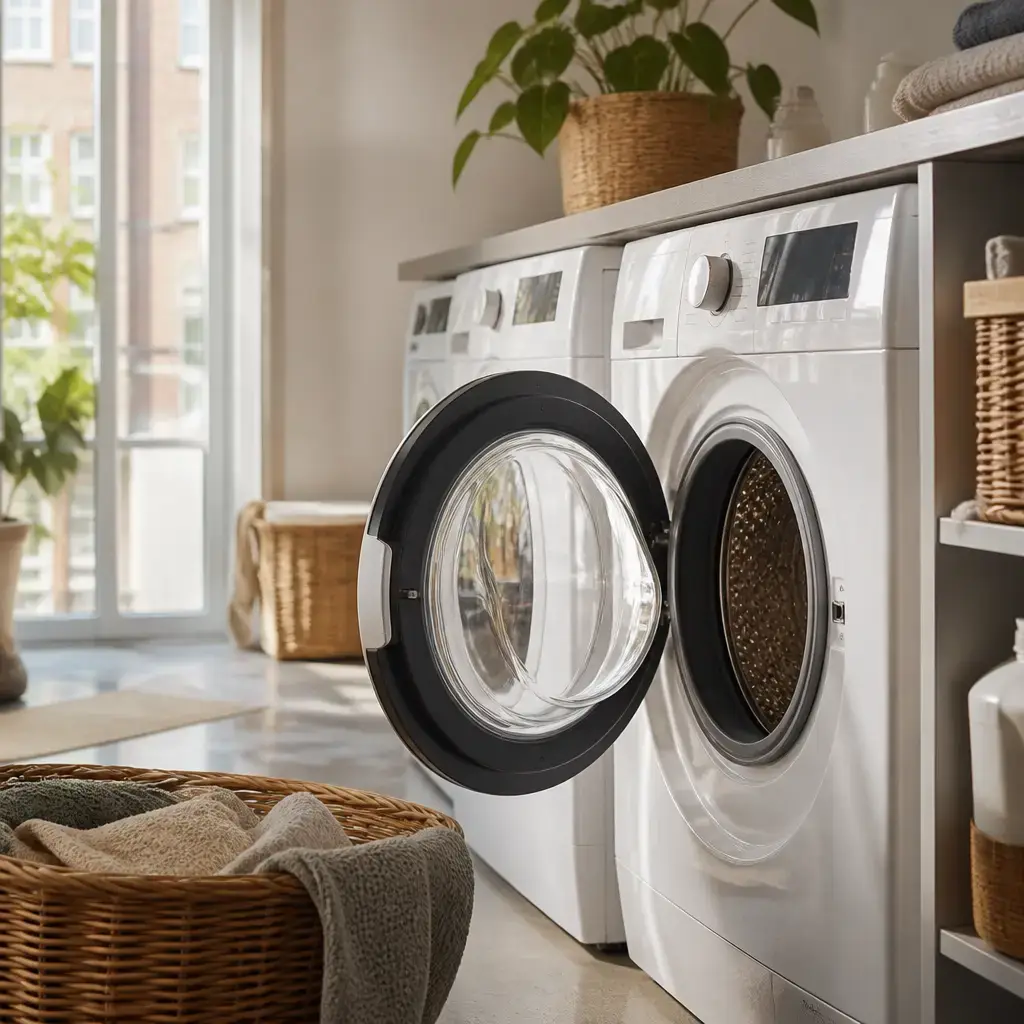
Use Getting a washing machine to start to practice Danish conversation, pronunciation, vocabulary, grammar, and quizzes.
Dialogue
Denne vaskemaskine vil ikke starte.
DEN-uh VAS-guh-mah-SHEE-nuh veeel EH-guh STAR-duh. This washing machine won't start.Har du tjekket stikket og tændknappen?
HAH doo CHEH-guhd SDEH-guhd uh TEN-knap-uhn? Did you check the plug and the power button?Stikket sidder i, men der sker ikke noget.
SDEH-guhd SEH-thuh ee, men dair skair EH-guh NOH-uth. The plug is in, but nothing happens.Måske er døren ikke lukket ordentligt.
MAW-sguh air DUR-en EH-guh LOO-guhd OR-den-lee. Maybe the door isn't closed properly.Der står i vejledningen, at døren skal klikke, før maskinen starter.
Dair STOR ee VY-luh-thneng, ad DUR-en skal KLEH-guh, fur mah-SHEE-nuhn STAR-duh. The instructions say it should click before it starts.Tryk døren ind en gang til, og tryk så på start.
TRURK DUR-en en uhn GANG tell, uh TRURK saw poh STARD. Push the door once more, then press start.Døren klikkede, og nu virker maskinen.
DUR-en KLEH-guh-thuh, uh NOO VAIR-guh mah-SHEE-nuhn. The door clicked, and now it works.Nogle gange løser enkle tjek problemet.
NOH-luh GANG-uh LUR-suh ENG-luh CHEK proh-BLAY-muth. Sometimes simple checks solve the problem.Sentence explanations
Denne vaskemaskine vil ikke starte.
This washing machine won't start.
- Denne
- this
- vaskemaskine
- washing machine
- vil ikke
- won’t
- starte
- start
More detail
Denne means “this” and identifies one nearby or otherwise identifiable thing. It is the singular common-gender form; compare dette with singular neuter nouns and disse with plural nouns. Here it agrees with vaskemaskine. vaskemaskine means “washing machine.” It is a compound noun: vaske relates to washing and maskine means “machine,” but the whole compound is the reusable word for a washing machine. The form shown is singular indefinite. The definite singular form is vaskemaskinen, “the washing machine,” and the plural is vaskemaskiner, “washing machines.” vil ikke combines the finite modal verb vil with the negation ikke. Here, with a machine as the subject, it says that the machine will not carry out the following action; it does not assert a human desire or a literal refusal. Danish commonly places ikke after the finite verb and before the infinitive: vil ikke starte. starte is the infinitive “to start.” Its present form is starter, past form startede, and perfect participle startet. After the modal vil, Danish uses the infinitive, so vil ... starte means “will ... start,” while vil ikke starte means “will not start.” Together, Denne vaskemaskine identifies one washing machine, and vil ikke starte says that it will not carry out the action of starting. The complete meaning is: “This washing machine won’t start.”
Har du tjekket stikket og tændknappen?
Did you check the plug and the power button?
- Har du
- did you…? — question pattern
- tjekket
- checked
- stikket
- the plug
- tændknappen
- the power button
More detail
Har du is the question opening “have you…?”. Danish places har before the subject du in this yes/no question. With a following past participle, har + participle forms the perfect: it asks whether the checking has been done. Example: Har du spist? — “Have you eaten?” tjekket means “checked” here. It is the past participle of tjekke (“to check”), so the reusable pattern is har + tjekket, not a separate past-tense form of har. Example: Jeg har tjekket døren. — “I have checked the door.” stikket means “the plug.” It is the definite singular form of stik (“plug” in this context). The ending -et marks this noun’s definite form; it does not itself state a quantity. Example: Jeg finder stikket. — “I am finding the plug.” tændknappen means “the power button.” It is the definite singular form of the compound noun tændknap, built from tænd (“switch on”) and knap (“button”). The ending -en marks the definite form of this common-gender noun. Example: Tryk på tændknappen. — “Press the power button.” Together, Har du tjekket asks whether the checking has been completed, and stikket og tændknappen names the two things checked. The whole utterance therefore means: “Did you check the plug and the power button?”
Stikket sidder i, men der sker ikke noget.
The plug is in, but nothing happens.
- Stikket
- the plug
- sidder i
- is in
- men
- but
- der sker
- happens there
- ikke noget
- nothing
More detail
Stikket means “the plug” here. It is the definite singular form of the neuter noun stik: et stik = “a plug,” stikket = “the plug.” The ending -et marks definiteness for this noun; it is not a separate word. sidder i describes the plug as being seated or positioned in something, here understood as being plugged in. sidder is the present form of sidde, whose basic meaning is “sit,” but it is also used for something that is located or fits in a position. The preposition i means “in.” For example, Nøglen sidder i låsen. means “The key is in the lock.” men means “but” and joins two contrasting clauses. It does not itself express the negative meaning; the negation appears later in the sentence. der sker is part of the Danish pattern der sker ..., meaning that something happens or takes place. sker is the present form of ske, “happen.” Here der is an expletive or introductory subject, not a clearly identified participant; the thing that happens is expressed by noget, in the negative phrase that follows. For example, Der sker meget her. means “A lot happens here.” ikke noget gives the negative result: ikke means “not,” and noget means “something” or, after negation, “anything.” Together here they mean “nothing.” Noget is used for a thing or unspecified matter; the related word nogen generally refers to a person, so these are not simply interchangeable gender forms. For example, Jeg ser ikke noget. means “I don’t see anything.” Together, Stikket sidder i says that the plug is in place or plugged in. men introduces the contrast, and der sker ikke noget says that nothing happens. The complete meaning is: “The plug is in, but nothing happens.”
Måske er døren ikke lukket ordentligt.
Maybe the door isn't closed properly.
- Måske
- maybe
- er
- is
- døren
- the door
- ikke
- not
- lukket
- closed
- ordentligt
- properly
More detail
Måske means “maybe” and marks the statement as uncertain rather than asserting that the door is definitely closed incorrectly. A useful contrast is måske (“maybe”) versus helt sikkert (“definitely”), when the context supports that distinction. er is the present-tense form of være, “to be.” Here it links the subject to a state: døren er ... means “the door is ...”. døren means “the door.” The form is built from dør (“door”) with the definite ending -en, so dør is “a door” and døren is “the door.” ikke means “not.” In this sentence it negates the state expressed by the words that follow it: the door is not in the stated condition. A reusable pattern is er ikke + description, meaning “is not + description.” lukket means “closed” here. It is the past participle of lukke, “to close,” and with er it describes the door’s resulting state: døren er lukket means “the door is closed.” For example, Vinduet er lukket. means “The window is closed.” ordentligt means “properly” or “correctly.” It is an adverb modifying the state lukket, so the issue is whether the door is closed correctly, not whether it is merely closed in any way. The ending -t is the form used here for the adverb; the related adjective is ordentlig (“proper” or “correct”). Together, Måske + er døren + ikke lukket + ordentligt produces: “Maybe the door isn’t closed properly.” The sentence presents an uncertain explanation for the problem: the door may be in an incorrectly closed state.
Der står i vejledningen, at døren skal klikke, før maskinen starter.
The instructions say it should click before it starts.
- Der står
- it says; it is stated
- vejledningen
- the instructions; the manual
- døren
- the door
- skal
- should; is supposed to
- klikke
- click
- før
- before
- maskinen
- the machine
- starter
- starts
More detail
Der står is a fixed impersonal Danish way to introduce written information: “it says” or “it is stated.” Der here is not a specific person or object; it helps present the information that follows. A useful reusable pattern is Der står, at ... (“It says that ...”). vejledningen means “the instructions” or “the manual” here. Its base form is vejledning; the ending -en marks the definite singular form. The sentence does not specify whether this is a printed manual or another set of instructions. døren means “the door.” Its base form is dør, and -en marks definite singular. Danish nouns can use different definite endings, so the ending must be learned with the noun rather than assumed from the English translation. skal expresses what is required, expected, or supposed to happen. In this sentence, the instructions specify the expected sequence: the door is supposed to click. Danish skal is a modal verb and is followed here by the infinitive klikke. For a person, it can also express an obligation, as in the example Du skal trykke på start — “You must press start.” klikke is the infinitive “to click.” It describes the sound or action expected from the door. After a modal such as skal, Danish uses the infinitive: skal klikke, “is supposed to click.” før means “before” and introduces the event that comes later in the sequence. The pattern før ... can connect two clauses, as here: one event occurs before another. Example: Læs vejledningen, før du starter — “Read the instructions before you start.” maskinen means “the machine.” Its base form is maskine, and -n marks definite singular. It is the subject of the clause introduced after før. starter means “starts” here. Its base form is starte; starter is the present-tense form. Danish present tense does not change for person in the way English distinguishes “start” and “starts”: maskinen starter means “the machine starts,” while du starter means “you start.” Together, Der står i vejledningen introduces information found in the instructions. at døren skal klikke says that the door is expected to click, and før maskinen starter places that click earlier than the machine starting. The whole utterance therefore means: “The instructions say that the door should click before the machine starts.”
Tryk døren ind en gang til, og tryk så på start.
Push the door once more, then press start.
- Tryk
- push; press
- døren
- the door
- ind
- in; inward
- en gang til
- once more
- så
- then
- start
- start
More detail
Tryk is the imperative form of trykke, meaning “press” or “push.” The imperative gives a direct instruction and commonly appears without an explicit subject. Compare trykke “to press/push” with the command tryk “press/push.” døren means “the door” here. It is the definite singular form of dør “door”; the ending -en marks the definite form in this noun. The form identifies the door as a specific door in the situation, consistent with the surrounding context. ind is a directional adverb meaning “in” or “inward.” With a movement verb such as trykke, it specifies that the door is to be pushed inward, rather than merely pressed. The reusable pattern is trykke [something] ind, “push [something] in.” en gang til is the reusable expression “once more” or “again.” gang means “time” in the sense of an occurrence, while til adds the meaning “again” in this expression. For example, Læs det en gang til. means “Read it once more.” så means “then” here. It links the next instruction to the preceding one and presents the actions in sequence. start is “start” here, referring to the start control or button named start. In på start, the preposition på marks the control being pressed; the phrase means “on start” in the practical sense “press Start.” The word can have other uses in Danish, but this sentence uses it as the label of the control, not as a separately stated action. Together, Tryk døren ind gives the first command, “Push the door in.” en gang til adds that this should be done once more. og tryk så på start adds the next command: “then press Start.” The complete utterance is therefore: “Push the door once more, then press start.”
Døren klikkede, og nu virker maskinen.
The door clicked, and now it works.
- Døren
- the door
- klikkede
- clicked
- nu
- now
- virker
- works
- maskinen
- the machine
More detail
Døren means “the door.” It is the definite singular form of dør (“door”): en dør → døren. Danish commonly marks definiteness by adding an ending to the noun rather than using a separate word like “the.” klikkede means “clicked” here. Its base form is klikke (“to click”); klikkede is the past form. For example, Kontakten klikkede. means “The switch clicked.” nu means “now” and places the situation at the present time. It links the earlier clicking with the current state without itself expressing the verb’s tense. virker means “works” or “functions” here. Its base form is virke; virker is the present form. The same verb can describe something functioning, as in Maskinen virker. (“The machine works.”), or something seeming a certain way in another context, so the intended meaning here is fixed by the translation and the machine context. maskinen means “the machine.” It is the definite singular form of maskine (“machine”): en maskine → maskinen. Together, Døren klikkede says “The door clicked.” After og (“and”), nu virker maskinen says “now the machine works.” The complete utterance is therefore: “The door clicked, and now it works.” In the fixed translation, “it” refers to the machine, the subject of the second clause.
Nogle gange løser enkle tjek problemet.
Sometimes simple checks solve the problem.
- Nogle gange
- sometimes
- løser
- solve
- enkle
- simple
- tjek
- checks
- problemet
- the problem
More detail
Nogle gange means “sometimes.” It is a time expression for an event that happens on some occasions, not every time. It commonly appears at the beginning of a sentence, as here. løser is the present-tense form of løse, “to solve.” In Danish, the present form is the same with singular and plural subjects: jeg løser, et tjek løser, and de løser. Here it is used with the plural subject enkle tjek; the form itself does not show that number. enkle is the form of the adjective enkel, “simple,” used with a plural noun such as tjek. The basic comparison chain is enkel (simple), enklere (simpler), enklest (simplest). Example: Enkle løsninger virker ofte. — “Simple solutions often work.” tjek means “checks” here. The noun has the same written form in the indefinite singular and plural: et tjek — “a check,” flere tjek — “several checks.” The adjective enkle has its plural form here, so enkle tjek is read as plural in this sentence. problemet means “the problem.” It is the definite singular form of et problem: et problem — “a problem,” problemet — “the problem.” The ending -et marks the definite form for this neuter noun; it does not itself indicate a quantity beyond the singular definite noun. Together, enkle tjek is the plural subject “simple checks,” løser is “solve,” and problemet is the definite object “the problem.” With Nogle gange setting the time frequency, the whole utterance means: “Sometimes simple checks solve the problem.”
Grammar Points
Imperativ: tryk
Tryk.
TRURK.Press.
The imperative uses the verb stem without a subject: trykke becomes Tryk.
Bestemt form: -en eller -et
stikket
SDEH-guhdthe plug
Danish often adds -en or -et to a noun to express “the,” depending on the noun’s gender.
Danish Vocabulary
- Gender
- common
- Definite
- true
Måske er døren ikke lukket ordentligt.
Døren er ikke lukket ordentligt.
Måske er døren ikke lukket ordentligt.
Døren er ikke lukket ordentligt.
Stikket sidder i, men der sker ikke noget.
Der sker ikke noget.
Denne vaskemaskine vil ikke starte.
- Gender
- neuter
- Definite
- true
Har du tjekket stikket og tændknappen?
Har du tjekket stikket og tændknappen?
- Gender
- common
- Definite
- true
Har du tjekket stikket og tændknappen?
- Gender
- common
- Definite
- false
Denne vaskemaskine vil ikke starte.
- Gender
- common
- Definite
- true
Der står i vejledningen, at døren skal klikke.
Quiz
Word Order
Arrange the words in the correct order.
This washing machine won't start.
Show Answer
Denne vaskemaskine vil ikke starte.Did you check the plug and the power button?
Show Answer
Har du tjekket stikket og tændknappen?Maybe the door isn't closed properly.
Show Answer
Måske er døren ikke lukket ordentligt.Spelling
Tap the letters to spell the word.
maybe
Show Answer
måskedoor
Show Answer
dørento be plugged in; to sit
Show Answer
sidderpower button